


How to grow Tithonia
Also known as the Mexican sunflower, tithonia is a large, fast-growing plant from Mexico and Central America that has also become naturalised in some warmer, moister parts of North America. While there are ten different species – some shrubby, others perennial – it is the annual species Tithonia rotundifolia which is most widely grown. There are numerous cultivated forms of this, perhaps the best-known of which is ‘Torch’, enjoyed by gardeners around the world since the 1950s. ‘Goldfinger’ and ‘Fiesta del Sol’ are also popular, both particularly well-suited to containers due to their smaller and more compact size.
A distinguishing feature of tithonia is its hollow, flaring flower stalks, which set it apart from otherwise similar-looking relatives such as helenium, rudbeckia, and zinnia. While extreme heat is not a problem for this plant, it does grow poorly in cool, overcast weather, meaning success in the UK can vary depending on the kind of summer we’re having!

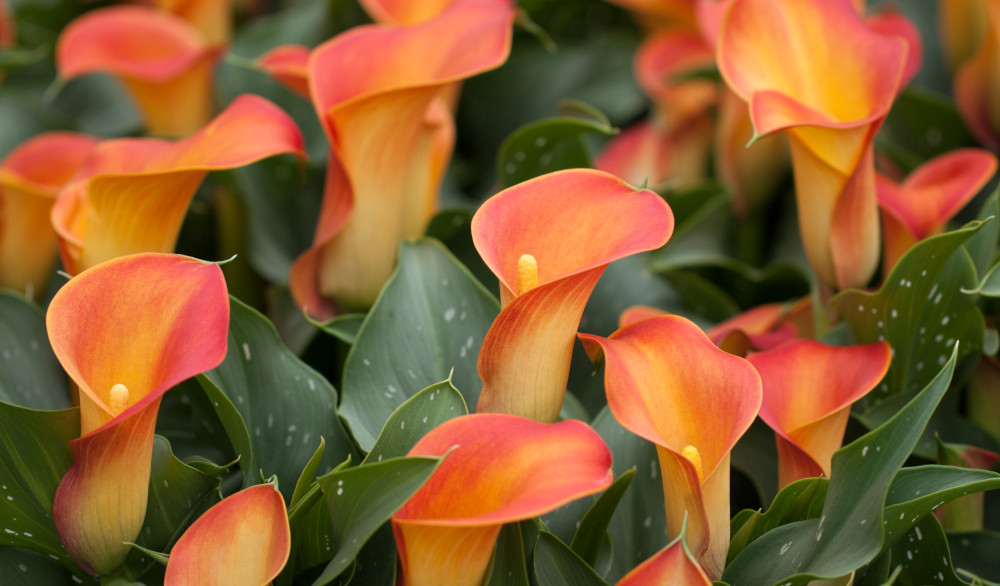
Zantedeschia is a genus of flowering plants from the family Araceae and is native to southern Africa. With a rich history dating back to the Ancient Romans, these deciduous or semi-evergreen perennials have been used as a symbol of celebration. Zantedeschia was Named after Professor Giovanni Zantedeschia, an Italian botanist.
There are two main forms of Zantedeschia: hardy and tender. Hardy forms of the plant can be grown outdoors, enjoy moist soil and full sun or partially shaded conditions - these are known as Arum lilies. Tender forms of Zantedeschia prefer being grown in containers or pots and should be brought inside over the winter - these are known as Calla lilies.
With tuberous flora in all colours from whites, yellows and oranges to deep reds and purples, Zantedeschias are not to be overlooked in any garden, as long as they have sufficient sunlight to grow in.
Ready to learn more about growing Zantedeschia? Read on for all there is to know...
Key Information
Soil pH

Position

Hardiness


Where & when to plant Tithonia
Position - Full sun. This is crucial for tithonia which tends to flop and suffer fungal diseases when grown in shade. Try also to keep plants sheltered from strong winds – tithonia stems are brittle and break easily.
Soil - Any well-draining soil. Rocky, sandy soils most closely match the natural habitat of this plant. Avoid heavy, wet soils.
Flowering Period - Midsummer until the first frosts.
Hardiness - Tender, with a rating of H2 (minimum temperature of between 1 and 5°C)
Like a lot of summer bedding plants, tithonia hails from warmer climes than ours and can only go outside in the UK once risk of frost has passed. This varies from region to region, though tends to be mid to late May. If your plants arrive before it is safe to go outdoors, keep them in a bright, frost-free environment until the time is right. A greenhouse, conservatory, coldframe, or sunny porch or windowsill are all ideal. Just make sure you don’t let them dry out! Small plug plants are best potted up into 9 centimetre pots if they’re going to spend time in a ‘holding zone’ such as this.
An important thing to note with tender plants like tithonia is the need to gradually harden them off, rather than suddenly move them outside. This slow toughening up reduces the chances of them going into ‘shock’, which can severely check growth.
The easiest way to do this is by using a cold frame opened in gradual increments over the course of a week or two. Keep the lid closed at night until the last couple of days of the hardening off period.
If you don’t have a cold frame, a bit of horticultural fleece combined with a spot of ‘musical pots’ works just as well. A week or so before you anticipate planting your tithonia out, wrap the plants in a couple of layers of fleece and place outside during the day (moving back into a warm, protected environment at night). Do this for a few days then reduce the fleece to one layer. After a few more days like this, remove the fleece completely. If it’s warm enough you can leave outside at night too, though reapply the fleece for this. At the end of the hardening off period, leave outside completely uncovered for a couple of days and nights before planting out as below. Though somewhat tedious, your efforts will be rewarded with thriving, robust plants that are ready and raring to go when planted outside.
When it comes to choosing a spot, taller forms such as ‘Torch’ are ideal for providing long-lasting colour at the back of a border, while shorter forms do well towards the front or in a container. With an impressive vase life of up to two weeks, tithonia is also a popular choice for cut flower gardens.
How to plant Tithonia
· For planting in the garden, dig the soil area removing any large stones and weeds and breaking up any lumps Unless your soil is very poor, don’t worry about adding organic matter (i.e., manure or garden compost) at this stage; tithonia prefers an average to low nutrient content and so overdoing it can cause more harm than good.
· Water plants well and allow to drain before planting.
· Dig a hole twice the width of the root-ball.
· Place the plant in the hole, ensuring the top of the root ball sits level with the surface of the soil. Too low and the plant may rot, too high and the roots can dry out.
· Backfill with soil and firm in gently.
· Soak well with water.
- For planting in a container, go for as large a pot as you can, remembering that tithonia will grow quickly over the course of the summer. Ensure there are plenty of drainage holes in the bottom. You may wish to grow tithonia on its own, or with a mix of other annual bedding plants.
- If you are using a large or heavy pot, it can be a good idea to fill and plant it in situ to save yourself the trouble of moving once full.
- Use any good quality compost. If not already present (check the labelling on the bag) mix in some slow-release fertiliser granules.
- Start by partially filling the pot with compost; enough so that when placed on it the upper surface of the root ball is about 3 centimetres lower than the top of the pot.
- Fill around the plant with compost, firming down with your fingers then adding a little more so it is held tight.
- Pick up the container and lightly tap on the potting bench or ground a few times to help further settle the compost around the plant.
- Soak well with water.
- A mulch with horticultural grit will look attractive and help to prevent a ‘cap’ or crust forming on the top of the compost (something container plants can suffer due to the artificial nature of their watering).

What to plant with Tithonia
Pair tithonia with other sun-loving, fiery-coloured plants to create a hot, tropical-looking planting scheme. Try to include a mix of tender plants (which you’ll have to lift and keep frost-free each year), such as dahlia, canna, and musa; hardy plants that can be left in the ground, such as alstroemeria, rudbeckia, helenium, and crocosmia; and a few permanent structural shrubs or trees with dark or purple foliage, such as Sambucus nigra, buxus, and cotinus.


How to care for Tithonia
Pruning and Deadheading
In tropical climates where some species of tithonia have escaped to become an invasive weed, deadheading is important to prevent vigorous seeding. In our cooler, UK climate this is not a problem, though you may wish to deadhead for the purposes of encouraging further flower production and to keep the plant looking tidy. This can be done by either snipping off flowers individually as they fade (taking them down to just above a healthy leaf node), or by giving the whole plant a light shearing (taking off around a third) during a midseason lull in blooming. Taking the latter approach may well mean sacrificing some flowers!
If you wish to collect and sow seed (see ‘How to propagate tithonia’), leave a few flowerheads intact towards the end of the flowering period.
Remove the entire plant to the compost heap once it has been knocked back by the first frosts.
Watering
In the open ground, tithonia should be given a good soaking on planting, then a handful of times over the following weeks. Once established it should be largely self-sufficient, needing watering only in prolonged periods of hot, dry weather.
Container-grown tithonia will need watering regularly. A good rule of thumb to avoid overdoing it is to water only once the top few centimetres of compost have dried out. Be aware, however, that in the height of summer this can happen in as little as 24 hours – particularly with small or very full containers.
Feeding
On healthy, fertile soil there should be no need to provide tithonia with additional feed.
In a container, try to use a good quality compost with slow-release granules mixed in. This generally provides enough nutrients for six weeks, after which a monthly dose of balanced liquid feed is recommended throughout the growing season.
Cold Protection
The most widely cultivated species of tithonia is an annual, meaning it lasts for one growing season only. Care should be taken at the start of the season to plant it out only once temperatures remain above freezing.
Pests and Diseases
Tithonia is usually considered trouble-free.
How to propagate Tithonia
Tithonia can be propagated by seed:
· From midsummer, leave some seedheads to mature and ripen on the plant
· Seeds are typically ready for collecting when they have turned dark brown or black.
· Snip the seedheads from the plant using scissors or secateurs. Try to do this in dry conditions, and shake or separate the seeds into a small paper bag or envelope.
· Back at the potting bench or a table, separate the seeds from the brown chaff. Return the seeds to the paper bag or envelope, label, and store somewhere cool and dry until it is time to sow the following spring.
· In March or April, sow onto the surface of a compost-filled pot or module tray. Use a garden sieve to cover lightly with compost, or shake a little vermiculite over by hand.
· Water gently with a fine spray until the compost is evenly moist but not waterlogged.
· Place the module tray somewhere warm and bright, such as in a greenhouse or on a sunny windowsill. If you have a heated propagator, all the better.
· Expect germination in one to two weeks. If in a heated propagator, remove from here as soon as seedlings emerge.
· Once the seedlings are large enough to handle, pot into individual 9 centimetre pots. Grow on for a few weeks, then plant out once all risk of frost has passed.
* Many plants carry Plant Breeders Rights and cannot be propagated for commercial purposes.
Common Tithonia Questions
Does tithonia require support?
Taller forms will benefit from some form of support to prevent flopping. Whether canes and string, metal link stakes, or a network of cut branches inserted into the soil and woven together, it is best to get the support in place early in the season. That way, the plant can grow up and through its support naturally, rather than looking unpleasantly hoiked into place!
Is tithonia easy to grow?
Very much so. It offers quick rewards while asking little of the gardener and is a good plant for beginners.
Is tithonia invasive?
This can be the case in frost-free climates, though our cold winters mean this isn’t a problem in the UK.
