


How to grow Alonsoa
Technically, this half-hardy South American member of the snapdragon family is a perennial, though in our chillier, UK climate it is usually grown as an annual. Also known as mask flower, it is valued for producing masses of blooms over an exceptionally long period (at least three months, often longer), along with its easy, low-maintenance nature.
There are around twelve species of alonsoa, though the most widely grown in the UK is Alonsoa meridionalis, a bushy, red-stemmed plant with loose racemes of flowers in rich, vibrant shades of orange or red.

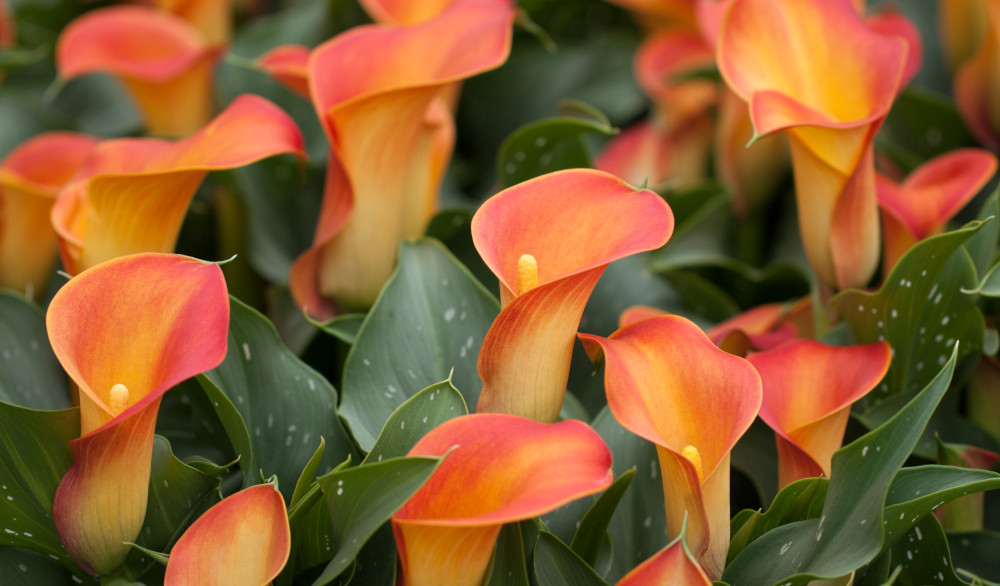
Zantedeschia is a genus of flowering plants from the family Araceae and is native to southern Africa. With a rich history dating back to the Ancient Romans, these deciduous or semi-evergreen perennials have been used as a symbol of celebration. Zantedeschia was Named after Professor Giovanni Zantedeschia, an Italian botanist.
There are two main forms of Zantedeschia: hardy and tender. Hardy forms of the plant can be grown outdoors, enjoy moist soil and full sun or partially shaded conditions - these are known as Arum lilies. Tender forms of Zantedeschia prefer being grown in containers or pots and should be brought inside over the winter - these are known as Calla lilies.
With tuberous flora in all colours from whites, yellows and oranges to deep reds and purples, Zantedeschias are not to be overlooked in any garden, as long as they have sufficient sunlight to grow in.
Ready to learn more about growing Zantedeschia? Read on for all there is to know...
Key Information
Soil pH

Position

Hardiness


Where & when to plant Alonsoa
Position - Full sun
Soil - Any fertile, well-draining soil
In a container, use a loam-based compost such as John Innes No. 2
Flowering Period - Early summer until the first frosts
Hardiness - Half-hardy (H3, 1 to -5°C)
Alonsoa hails from warmer climes than ours and should only go outside in the UK once risk of a hard frost has passed. This varies from region to region, though tends to be mid to late May. If your plants arrive before it is safe to go outdoors, keep them in a bright, frost-free environment until the time is right. A greenhouse, conservatory, coldframe, or sunny porch or windowsill are all ideal. Just make sure you don’t let them dry out! Small plug plants are best potted up into 9 centimetre pots if they’re going to spend time in a ‘holding zone’ such as this. For best results, harden them off for a few days before planting outside. This means leaving them outside during the day and returning to the indoor environment at night.
When it comes to choosing a spot, alonsoa is ideal for a summer container display or as a cheerful gap filler in borders. You may also like to grow it as a longer-term plant in a temperate conservatory, in which case it is likely to assume a winter-flowering habit. Any potting up is best done in spring.
How to plant Alonsoa
· For planting in the garden, dig the soil area removing any large stones and weeds and breaking up any lumps. If your soil is poor, now is a good chance to improve it by mixing in organic matter such as manure or garden compost. Rake level and firm with your heels. Rake level again.
· Water plants well and allow to drain before planting.
· Dig a hole twice the width of the root-ball.
· Place the plant in the hole, ensuring the top of the root ball sits level with the surface of the soil. Too low and the plant may rot, too high and the roots can dry out.
· Backfill with soil and firm in gently.
· Soak well with water.
- For planting in a container, first choose an appropriately sized pot – you may wish to grow your alonsoa on its own, in which case go for one just a few centimetres larger than the nursery pot, or as part of a larger, mixed container. Either way, ensure there are plenty of drainage holes in the bottom.
- If you are using a large or heavy pot, it can be a good idea to fill and plant it in situ to save yourself the trouble of moving once full.
- Use a good quality loam-based compost with some slow-release fertiliser granules mixed in – these may already be present in the compost, or you may have to add them yourself. It’s also a good idea to mix in some horticultural grit; in the wild alonsoa grows on stony slopes, so good drainage is key to making it feel at home.
- Start by partially filling the pot with compost; enough so that when placed on it the upper surface of the root ball is about 3 centimetres lower than the top of the pot.
- Fill around the plant with compost, firming down with your fingers then adding a little more so it is held tight.
- Pick up the container and lightly tap on the potting bench or ground a few times to help further settle the compost around the plant.
- Soak well with water.
- A mulch with horticultural grit will look attractive and help to prevent a ‘cap’ or crust forming on the top of the compost (something container plants can suffer due to the artificial nature of their watering).

What to plant with Alonsoa
For a generous, vibrant summer container display, pair alonsoa with other patio favourites such as begonia, diascia, nemesia, calibrachoa, fuchsia, and petunia.
In beds and borders, team alonsoa up with other fast-growing summer bedding to fill gaps between perennial plants with a riot of colour. Think cosmos, nigella, nicotiana, and tithonia.


How to care for Alonsoa
Pruning and Deadheading
Pinching the growing tip from alonsoa when it is 7-8 centimetres tall will encourage a bushier habit. Deadheading during the flowering period will promote continuous blooming.
Once your alonsoa has been knocked back by the first frosts, simply remove the entire plant to the compost heap. If you are growing alonsoa indoors as a conservatory perennial, trim back after flowering.
Watering
In the open ground, alonsoa should be given a good soaking on planting, then a handful of times after this over the following few weeks. Once established it should be largely self-sufficient, needing watering only in prolonged periods of hot, dry weather.
Container-grown alonsoa will need watering regularly. A good rule of thumb to avoid overdoing it is to water only once the top few centimetres of compost have dried out. Be aware, however, that in the height of summer this can happen in as little as 24 hours – particularly for small or very full containers, and those kept indoors. If you’re keeping your alonsoa as a permanent conservatory plant, reduce watering during the colder months to just enough to prevent the compost drying out completely.
Feeding
On healthy, fertile soil there should be no need to provide alonsoa with additional feed.
In a container, try to use a good quality compost with slow-release granules mixed in. This generally provides enough nutrients for six weeks, after which a fortnightly dose of balanced liquid feed will help maximise performance.
Cold Protection
Alonsoa is unlikely to survive a UK winter outdoors and is usually confined to the compost heap once flowering finishes in mid to late autumn.
When grown as a conservatory plant, it will need temperatures to remain above 10°C.
Pests and Diseases
Outdoors, alonsoa are generally problem free and are notably resistant to rabbits.
Inside, the usual issues of spider mite and aphid can crop up. Keeping plants as healthy as possible is the key to warding off problems, and by this we mean proper ventilation, adequately spaced plants (for good air flow), keeping everything well-watered and fed, and repotting into larger containers when necessary. Thoroughly cleaning the indoor environment every winter can also help to remove overwintering populations of pests.
Where infestations do take hold, try introducing biological controls (often sachets or tubes containing miniscule natural predators), or in the worst cases, remove the affected plant/s altogether.
How to propagate Alonsoa
Alonsoa can be propagated by seed, though may not always come true to the parent plant. It is a quick and easy plant to grow in this way, and you may expect flowering in as little as twelve weeks from sowing.
1. Seeds are typically ready for collecting towards the end of the blooming period when the heads have browned and dried.
2. Snip from the plant using scissors or secateurs. Try to do this in dry conditions, catching in a small, labelled paper bag or envelope held underneath. Store somewhere cool and dry until it is time to sow the following year.
3. For UK gardeners to get the most out of alonsoa, it pays to get a head start by sowing under cover in early spring (rather than waiting until it is warm enough to sow direct).
4. In March, fill a module tray with a well-draining compost mix. Tap lightly to settle the compost and remove any air pockets. Top up with more compost if needed.
5. Sprinkle a small pinch of two or three seeds in each module.
6. Use a garden sieve to cover with a fine layer of compost.
7. Water the soil gently with a fine spray until it is evenly moist but not waterlogged.
8. Place the module tray in a heated propagator set at 15-18°C if you have one, or on a sunny windowsill if not.
9. Once seedlings have germinated, move to a cooler spot.
10. When large enough to handle, thin out the seedlings in each module to the strongest one.
11. Allow the remaining seedling to grow a little larger, then pot into individual 9 centimetre pots. Grow on and plant out as above.
* Many plants carry Plant Breeders Rights and cannot be propagated for commercial purposes.
Common Alonsoa Questions
Do alonsoa flowers cut well?
Indeed, they do. Alonsoa flowers last well in a vase and are popular for cut flower borders.
Is alonsoa poisonous?
Alonsoa has no toxic effects reported on animals or people.
