


How to grow Asplenium
There are over 700 species of this evergreen fern found growing in a diverse range of habitats across the world, though UK gardeners will be most familiar with two species. Asplenium scolopendrium (hart’s tongue fern) is one of our native ferns, usually found growing in damp, shady areas of woodland. It is a hardy and resilient plant useful for shady spots in the garden, where it will grow slowly and steadily with the minimum of fuss. A. nidus (bird’s nest fern) is a tender, tropical fern, popular here as an easy, low-maintenance houseplant. Both have in common solid, glossy leaves which distinguish them from the feathery foliage of many other ferns.
This growing guide will offer cultivation advice for both types.

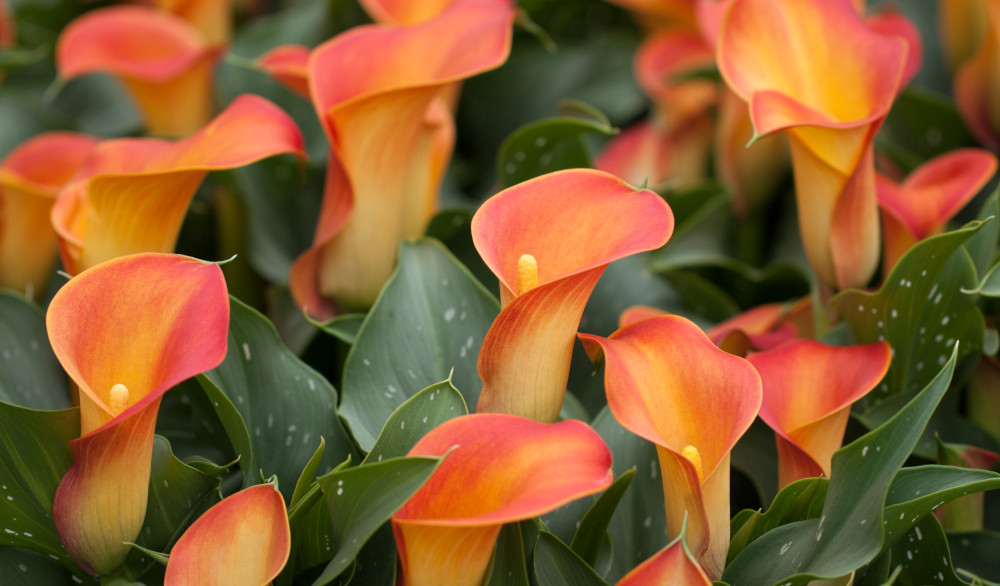
Zantedeschia is a genus of flowering plants from the family Araceae and is native to southern Africa. With a rich history dating back to the Ancient Romans, these deciduous or semi-evergreen perennials have been used as a symbol of celebration. Zantedeschia was Named after Professor Giovanni Zantedeschia, an Italian botanist.
There are two main forms of Zantedeschia: hardy and tender. Hardy forms of the plant can be grown outdoors, enjoy moist soil and full sun or partially shaded conditions - these are known as Arum lilies. Tender forms of Zantedeschia prefer being grown in containers or pots and should be brought inside over the winter - these are known as Calla lilies.
With tuberous flora in all colours from whites, yellows and oranges to deep reds and purples, Zantedeschias are not to be overlooked in any garden, as long as they have sufficient sunlight to grow in.
Ready to learn more about growing Zantedeschia? Read on for all there is to know...
Key Information
Soil pH

Position

Hardiness


Where & when to plant Asplenium
Position - Hardy species: outdoors, in partial shade
Tender species: indoors, either in bright, filtered light, or somewhere with shade from the midday and afternoon sun (i.e., an east or north-facing aspect). Moderate humidity required.
Soil - Outdoors: humus-rich, moist, and well-draining. Most species prefer a neutral to acidic pH, though A. scolopendrium (hart’s tongue fern) does best in more alkaline conditions.
Indoors: for best results, use a fern potting mix or make your own using equal parts loam, coarse leaf mould, sharp sand, and charcoal.
Hardiness - A. scolopendrium (hart’s tongue fern) is fully hardy, rated H6 (-15 to -20°C).
A. nidus (bird’s nest fern) is tender, rated H1B (10 to 15°C).
Hardy species are best planted out in autumn or spring. An autumn planting can be done by those gardening in mild conditions (and broadly speaking, this is the southern half of the UK). For those liable to very cold winters, it is best to wait until spring (generally the northern half of the UK). Planting can also be carried out in summer, though be prepared to water regularly.
This type of asplenium can be grown in partially shaded rock gardens, wall crevices, borders, and woodland gardens. It will also grow quite happily in a container, which makes it useful for adding greenery to those tricky, shady corners of patios and balconies.
Tender species are best potted up in spring. These are slow-growing plants with a relatively small root system, so you won’t have to do this too frequently. The main reason for moving them into a larger pot will be for the purposes of anchorage, rather than roots straining at their confines; the lush, large foliage can become out of proportion with the base and consequently prone to toppling over when knocked.
When it comes choosing a spot for tender species, we recommend bathrooms and kitchens for their levels of humidity. If you can find a suitable east or north-facing windowsill, great. If not, opt for the bright, indirect light found a metre or so back from a sunny, south-facing window. Low-humidity rooms are also an option if you are prepared to mist regularly throughout the growing season (every morning if you can) using a spray bottle. Standing the container on a saucer of water and gravel can also help; keep the water level topped up regularly to just below the top of the gravel.
How to plant Asplenium
· For planting in the garden, dig the soil area removing any large stones and weeds and breaking up any lumps. Rake level and firm with your heels. Rake level again. Now is the time to add well-rotted organic matter such as manure or garden compost.
· Water your asplenium well and allow it to drain before planting.
· Dig a hole twice the width of the root-ball.
· Place the plant in the hole, ensuring the top of the root ball sits level with the surface of the soil. Too low and the plant may rot, too high and the roots can dry out.
· Backfill with soil and firm in gently with your foot.
· Soak well with water.
· Mulch around the base with well-rotted organic matter.
· For planting in a container first find an appropriately sized pot. The best practice is to choose one just a few centimetres larger than the current rootball and increase every few years. Always ensure there are plenty of drainage holes in the bottom.
· Using either of the potting composts suggested above, start by partially filling the pot with compost; enough so that when placed on it the upper surface of the root ball is about 3 centimetres lower than the top of the pot.
· Fill around the plant with compost, firming down with your fingers then adding a little more so it is held tight.
· Pick up the container and lightly tap on the potting bench or ground a few times to help further settle the compost around the plant.
· Soak well with water.
· A mulch with horticultural grit will look attractive and help to prevent a ‘cap’ or crust forming on the top of the compost (something container plants can suffer due to the artificial nature of their watering).

What to plant with Asplenium
Outdoors, grow hardy asplenium species alongside fellow moist shade lovers to create a lush foliage display. Think other ferns such as adiantum and dryopteris, along with hostas, asarum, rodgersia, and – one of our favourite secret-weapons for these conditions – luzula.
Inside, pair the more tender asplenium with other shade-tolerant foliage houseplants such as colocasia, solenostemon, and cyrtomium.


How to care for Grasses, Ferns & Bamboo
Pruning and Deadheading
Hardy, outdoors asplenium require little pruning attention apart from a light tidy each spring. Remove tatty, older leaves to make way for the new ones about to unfurl.
Remove the individual leaves of tender, indoor species as and when required.
In both cases, snip off cleanly at the base.
Watering
Asplenium enjoys moist conditions and so, when grown outside, benefits from a good watering in on planting and then regular soakings until established. After this and providing it is grown in the right conditions with an annual mulch (more on this next), it should need watering only in prolonged periods of hot, dry weather.
Grown in a container, asplenium can be watered freely throughout the growing season (roughly March to September), aiming for consistently moist but not soggy compost. Be aware that in hot weather, containers may need watering more often than you might think (particularly smaller containers or those kept indoors). A daily squirt from a misting bottle is a good idea for those residing permanently inside, as this is a plant which enjoys moderate humidity levels. As growth slows in autumn, cease misting and reduce watering to the bare minimum, i.e., just enough to prevent the compost drying out completely.
Feeding
On healthy, fertile soil, an annual mulch of well-rotted organic matter should provide enough nutrients for your asplenium (manure or garden compost are both ideal). As well as feeding the soil, mulch has the added benefit of suppressing weeds and locking in moisture. Do so when planting, and then again each autumn or spring.
Container-grown plants rely more on the gardener for nutrition. Start by making sure you use a good quality compost mix (suggestions above), then from March to the end of July apply a monthly dose of balanced liquid feed mixed to half the recommended strength.
Remember also to repot your asplenium every few years, going up slightly in pot size and using fresh compost. Once the plant reaches full size, an annual top dress is advisable; scrape off the top 5 centimetres of compost and replace with fresh.
Cold Protection
Hardy asplenium can be relied upon to get through a UK winter without concern. Like all plants, it can be more vulnerable to the effects of winter when grown in a container, so you may wish to wrap bubblewrap or fleece around pots in very cold, exposed areas.
Tender species rated H1B are subtropical and can bear no colder than 10 to 15°C. They’re best grown indoors, though can be moved outside temporarily during the warmer summer months. Here they will benefit from both increased airflow and the help of birds and insects to keep pests at bay, just remember to place them in partial shade; too much sun can scorch the leaves.
Pests and Diseases
A. scolopendrium (hart’s tongue fern) can be prone to rust in wet winters. Cut away any affected foliage. Plants tend to recover the following year.
A. nidus (bird’s nest fern) is vulnerable to scale insects. These flourish in dry conditions, so keeping your asplenium properly watered and humidified (see above) is an excellent preventative.
How to propagate Asplenium
Hardy species can be divided in spring:
1. Choose a day when the soil is not frozen or waterlogged.
2. Dig the plant out of the ground.
3. Shake off any excess soil.
4. Separate the plant into sections using either swift, cutting blows with a sharp spade, or two forks inserted back-to-back with tines touching, handles then pushed together to prise the plant apart.
5. Discard old, damaged, or surplus pieces, keeping healthy, vigorous material.
6. Replant decent-sized pieces where desired, and any smaller bits can be potted up.
7. Water well until fully established.
Tender species are best propagated by spores. This is a tricky process and as a result most gardeners prefer to buy them as young plants.
* Many plants carry Plant Breeders Rights and cannot be propagated for commercial purposes.
Common Asplenium Questions
Is asplenium poisonous?
Asplenium has no toxic effects reported to people or animals.
How big does a bird’s nest fern get?
In its natural habitat it can reach up to 1.5 metres in height, however in a container it tends not to exceed 60 centimetres.
Do I need to clean the leaves of my bird’s nest fern?
It’s a good idea to wipe the leaves occasionally – it’s surprising how much dust can collect on houseplants, having a significant impact on their ability to grow well.
