


How to grow Heptacodium
There is just one species in this genus; Heptacodium miconioides, commonly known as the seven son flower of Zhejiang. Found growing in mountains in China, this multi-stemmed, deciduous shrub or small tree is now endangered in the wild, with the few populations known to remain all threatened by habitat loss. Fortunately, through ethical propagation the plant has found a life in western horticulture, where gardeners and designers are increasingly drawn to its reliable, easy nature and unique beauty.
One of the few shrubs or trees with a late summer/ autumn flowering period, this member of the honeysuckle family erupts in clusters of small, white, strongly scented flowers while much of the garden around it begins to wane. When these eventually finish and drop, the bracts remain in place, turning a vibrant shade of rose-pink and creating the illusion of a second bloom. When bare in winter, an elegant vase-shaped habit and peeling, tan bark give the plant continued appeal. If all this weren’t enough, other impressive attributes include an ability to adapt to a wide range of soils, extreme hardiness, and a well-behaved, slow-growing nature.

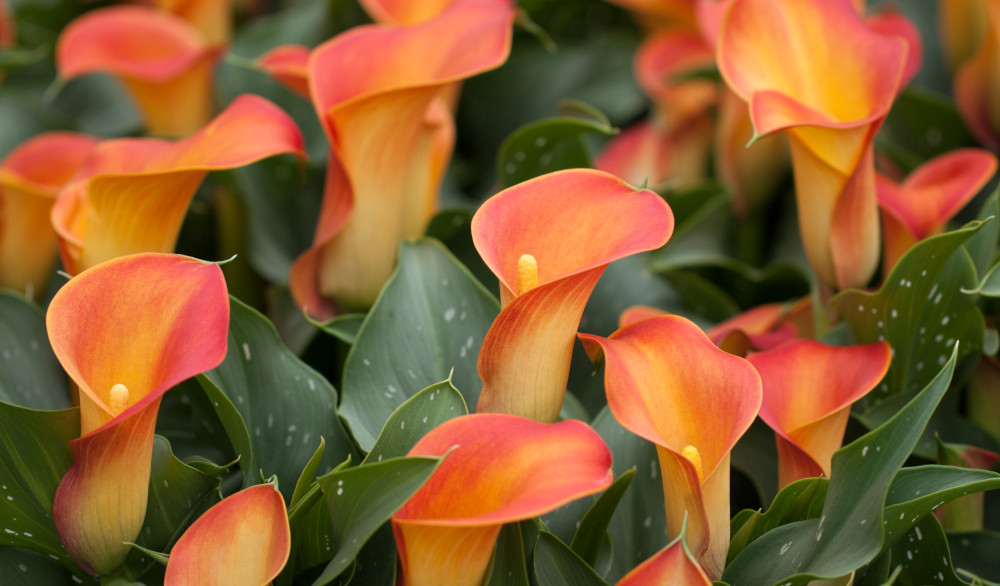
Zantedeschia is a genus of flowering plants from the family Araceae and is native to southern Africa. With a rich history dating back to the Ancient Romans, these deciduous or semi-evergreen perennials have been used as a symbol of celebration. Zantedeschia was Named after Professor Giovanni Zantedeschia, an Italian botanist.
There are two main forms of Zantedeschia: hardy and tender. Hardy forms of the plant can be grown outdoors, enjoy moist soil and full sun or partially shaded conditions - these are known as Arum lilies. Tender forms of Zantedeschia prefer being grown in containers or pots and should be brought inside over the winter - these are known as Calla lilies.
With tuberous flora in all colours from whites, yellows and oranges to deep reds and purples, Zantedeschias are not to be overlooked in any garden, as long as they have sufficient sunlight to grow in.
Ready to learn more about growing Zantedeschia? Read on for all there is to know...
Key Information
Soil pH

Position

Hardiness


Where & when to plant Heptacodium
Position - Full sun to light dappled shade (deep shade results in weak, leggy growth and is best avoided).
Soil - Will adapt to most soils, though its ideal is the loamy, slightly acidic soil found on woodland floors.
Flowering Period - Late summer to autumn
Hardiness - As hardy as it gets, rated H7 (-20°C and below)
Heptacodium can be planted anytime from autumn to early spring, avoiding days when the ground is very wet or frozen. Like all woody plants it will struggle to establish well from a summer planting, so any bought or acquired during the warmer months are best kept in the nursery pot (with regular watering and feeding!) until the time is right.
In terms of choosing a spot, heptacodium makes a wonderful specimen plant, perhaps in a lawn, courtyard, or mixed border. It will also grow happily in an area of deciduous woodland planting. A reasonable drought and salt tolerance makes it a good choice for coastal gardens, though it grows equally well inland.
Although slow growing, heptacodium will eventually want to reach something like 4 metres by 4 metres, so will need adequate room to mature freely.
While heptacodium prefers life in the open ground, it is possible to grow it successfully in a container if you are prepared to keep on top of watering and feeding.
How to plant Heptacodium
· For planting in the garden, dig the soil area removing any large stones and weeds and breaking up any lumps. Now is your chance to improve the soil by mixing in a generous amount of organic matter, such as well-rotted manure, garden compost, or leaf mould. Rake level and firm with your heels. Rake level again.
· Water plants well and allow to drain before planting.
· Dig a hole twice the width of the root-ball (this will encourage the roots to spread out and establish quickly).
· Place the plant in the hole, ensuring the top of the root ball sits level with the surface of the soil. Too low and the plant may rot, too high and the roots can dry out.
· Backfill with soil and firm in gently with your foot.
· Soak well with water.
· Mulch around the base with organic matter.
· For planting in a container, first choose an appropriately sized pot. The best practice with a slow-growing plant like heptacodium is to start just a few centimetres larger than the nursery pot and increase every year or two. Always ensure there are plenty of drainage holes in the bottom.
· Use a good quality loam-based compost (such as John Innes No. 3) with a little horticultural grit mixed in and, if not already present (check the labelling on the bag) some slow-release fertiliser granules.
· Start by partially filling the pot with compost; enough so that when placed on it the upper surface of the root ball is about 3 centimetres lower than the top of the pot.
· Fill around the plant with compost, firming down with your fingers then adding a little more so it is held tight.
· Pick up the container and lightly tap on the potting bench or ground a few times to help further settle the compost around the plant.
· Soak well with water.
· A mulch with horticultural grit will look attractive and help to prevent a ‘cap’ or crust forming on the top of the compost (something container plants can suffer due to the artificial nature of their watering).

What to plant with Heptacodium
Heptacodium can be part of a powerful late-season flush in the garden, along with the few fellow trees and shrubs to share a similar flowering period, such as Hydrangea paniculata ‘Limelight’, fuchsia, and Abelia x grandiflora. Include late-flowering perennials such as aster, Japanese anemone, rudbeckia, and aconitum, and add ornamental grasses to catch the low light with their seedheads. Stipa, miscanthus, panicum, and pennisetum are a few favourites.


How to care for Heptacodium
Pruning and Deadheading
When grown as a shrub, heptacodium is classed as RHS Pruning Group 1, which means pruning is not only unnecessary but actively discouraged as it is likely to spoil the overall appearance. The only intervention needed is the occasional light tidy, i.e., the removal of any dead, diseased, damaged, or badly placed growth, best done in late winter or very early spring.
If, however, you’d like to encourage a tree-like form by exposing the lower parts of the stems (and thus making a feature of the peeling bark), this can be done by gently pruning off the lower branches. Again, this is best carried out in late winter, and is recommended as a gradual process carried out over the course of a few years to avoid causing shock and stress to the plant.
Watering
Like all woody plants, heptacodium does best with regular watering for its first couple of growing seasons in the ground to encourage root establishment. After this it should be largely self-sufficient, particularly with an annual mulch to lock in moisture – more on this in our ‘Feeding’ section below. Having said this, in our changing climate it can still pay to soak trees and shrubs during prolonged periods of hot, dry weather, particularly younger specimens.
Container-grown heptacodium has less access to moisture and will need to be watered regularly throughout every growing season. Aim for infrequent big soakings, rather than little and often, allowing the top few centimetres of compost to dry out each time. Try to avoid the compost drying out completely, being aware that this can happen in as little as 24 hours during the height of summer, and sometimes even less for very full containers. From mid-autumn, the British climate tends to take over watering needs, though do remember to step in in the event of an unseasonably dry spell.
Feeding
On healthy, fertile soil, an annual mulch of well-rotted organic matter should provide sufficient nutrients for your heptacodium. This has the added benefit of suppressing weeds and locking in moisture. Autumn and spring are the best times to carry out mulching.
For an extra boost (most needed in the first few years of the plant being in the ground, or annually if growing in poor soil), apply a general-purpose granular feed such as blood, fish, and bone to the surface of the soil and lightly work it in. This is known as a ‘top dress’ and is best done in late winter or early spring.
Container-grown plants rely even more on the gardener for nutrition. Get off to a flying start by making sure you use a good quality compost, then throughout the growing season (March to September) apply a liquid feed every 3-4 weeks. Remember to repot into a slightly larger pot using fresh compost every year or two. In the intervening years, and every year once this is no longer feasible, carry out an annual topdress in spring. Scrape away the top 5 centimetres of compost and replace with fresh, remembering to mix in a little general-purpose slow-release feed.
Cold Protection
Heptacodium is as hardy as it gets and can be expected to survive even a harsh UK winter without the need for additional protection.
Pests and Diseases
Heptacodium is considered problem free.
How to propagate Heptacodium
Heptacodium is best propagated by semi-ripe cuttings in late summer, using growth that is becoming firm and woody at the base but is still flexible at the tip.
· Snip cuttings off the plant, if possible taking a longer piece than the ideal eventual length of around 10cm (to allow for trimming).
· Put in a plastic bag straight away to prevent drying out.
· Fill several pots with a well-draining compost mix.
· Trim the end of the cutting to just below a node (point at which leaves grow).
· Remove all but the top 2-4 leaves.
· If the remaining leaves are large, cut them in half with a sharp knife (to reduce water lost through transpiration).
· Insert the cuttings into the compost and water lightly. Several cuttings can be put in the same container if there is enough space to do this without them touching.
· Place in a propagating unit with bottom heat if you have one or covered with a plastic bag on a windowsill if not (out of direct sunlight).
· Keep the cuttings misted and occasionally watered until they root. You will know this has happened when roots emerge out of the bottom of the container – expect this to happen the following spring.
· Gently remove rooted cuttings and pot them into individual pots. Grow on in a cool yet frost-free environment such as an unheated conservatory, greenhouse, or cold frame, until they are large enough to be planted out as above.
* Many plants carry Plant Breeders Rights and cannot be propagated for commercial purposes.
Common Heptacodium Questions
Why is heptacodium known as the seven son flower of Zhejiang?
This is thought to refer to the flowers, which are held in clusters of seven.
Is heptacodium good for wildlife?
Yes, its flowers are a valuable late source of nectar for a range of pollinators and are particularly favoured by butterflies.
Is heptacodium invasive?
This plant is not considered invasive. You may notice some attempted spread by suckering, though this is easily controlled with annual removal.
Is heptacodium a long-lived plant?
Having only been introduced to western horticulture in the 1980s, the potential lifespan of heptacodium is as yet unknown. However, the specimens first grown at the Arnold Arboretum (Boston, US) are still going strong over 40 years on.
