


How to grow Lychnis
There are several garden favourites in this diverse and varied genus, all grown for their summer flowers and easy-going nature. Probably the best known is Lychnis coronaria (rose campion), a loose, airy cottage garden classic with silvery grey leaves and vibrant magenta flowers. Markedly different in appearance is another border favourite, L. chalcedonica (Maltese cross), a much stiffer and more upright plant with green leaves and umbel-like heads of orange-scarlet blooms. Then there are the more wild-looking, native species, including L. flos-cuculi (ragged robin), a widespread dweller of damp meadows with distinctive feathered, pale pink blooms, and the less common though equally attractive L. viscaria (German catchfly). This mat-forming plant produces grass-like foliage and sticky stems bearing spikes of purplish pink flowers. A long tap root gives it an especially high drought tolerance.
A note here on naming. The genus of Lychnis has seen its fair share of botanical chopping and changing over the years, with several species being switched between this and close relative Silene (both belonging to the carnation family, Caryophyllaceae). As a result, the horticultural industry uses the names interchangeably, for example Lychnis flos-cuculi may also be known as Silene flos-cuculi, and Lychnis coronaria can sometimes be Silene coronaria. Our advice, if you’re ever searching for these online or in books, is to hedge your bets by trying both names.
Lychnis viscaria is another species with a dual identity, sometimes referred to as Viscaria vulgaris. At Hayloft we try to keep things simple by using the names our customers are most familiar with, so for now we’ll continue to refer to all these species as Lychnis.

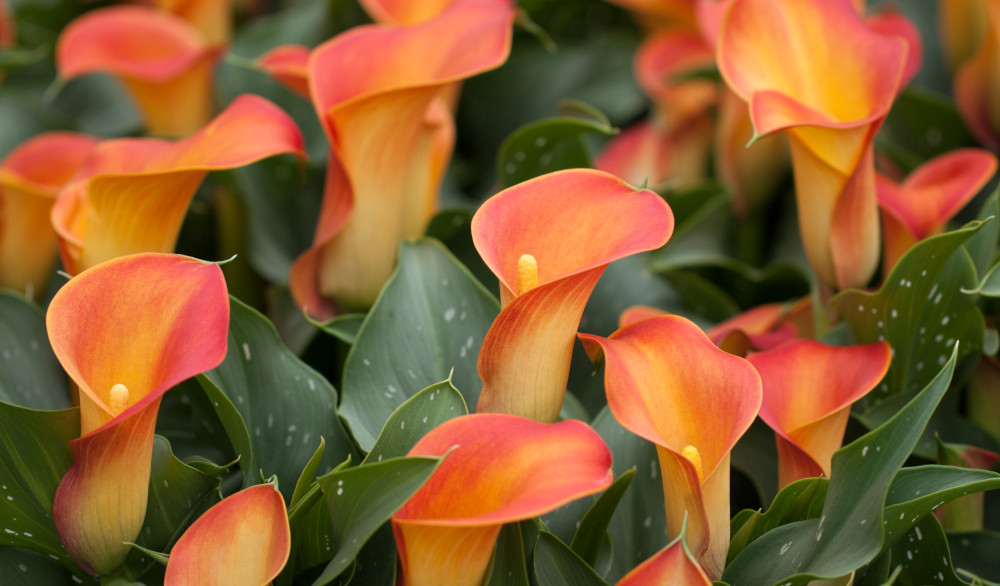
Zantedeschia is a genus of flowering plants from the family Araceae and is native to southern Africa. With a rich history dating back to the Ancient Romans, these deciduous or semi-evergreen perennials have been used as a symbol of celebration. Zantedeschia was Named after Professor Giovanni Zantedeschia, an Italian botanist.
There are two main forms of Zantedeschia: hardy and tender. Hardy forms of the plant can be grown outdoors, enjoy moist soil and full sun or partially shaded conditions - these are known as Arum lilies. Tender forms of Zantedeschia prefer being grown in containers or pots and should be brought inside over the winter - these are known as Calla lilies.
With tuberous flora in all colours from whites, yellows and oranges to deep reds and purples, Zantedeschias are not to be overlooked in any garden, as long as they have sufficient sunlight to grow in.
Ready to learn more about growing Zantedeschia? Read on for all there is to know...
Key Information
Soil pH

Position

Hardiness


Where & when to plant Lychnis
Position - Full sun or partial shade
Soil - Most species prefer moist, fertile soil, though silver-leaved species produce their best leaf colour in dry soil.
Flowering Period - Summer
Hardiness - Hardy, rated from H5 (-10 to -15°C) to H7 (-20°C and below), depending on the species.
Lychnis is best planted in autumn or spring. An autumn planting can be done by those gardening in mild conditions (and broadly speaking, this is the southern half of the UK). For those liable to cold, wet winters, it is best to wait until spring (generally the northern half of the UK, or those with very heavy soil). Planting can also be carried out in summer, though be prepared to water regularly.
When it comes to choosing a spot, grow Lychnis chalcedonica in a sunny border or as underplanting in a rose garden. L. coronaria and L. viscaria can be used in the same way, though are equally as happy in a rock garden or dry border. All of these species may need support if grown in a windy area, though L. coronaria does have a lovely habit of righting itself if it does flop over.
L. flos-cuculi thrives in damp wildflower meadows and naturalistic planting schemes, and there are numerous cultivated forms offering white flowers and/ or a dwarf form to suit different situations.
Lychnis can also be grown in a container. Dwarf forms are particularly well-suited to this, such as L. flos-cuculi ‘Petite Jenny’ or ‘Petite Henri’.
How to plant Lychnis
· For planting in the garden, dig the soil area removing any large stones and weeds and breaking up any lumps. Now is your chance to add a generous amount of organic matter, such as well-rotted manure or garden compost. Rake level and firm with your heels. Rake level again.
· Water plants well and allow to drain before planting.
· Dig a hole twice the width of the root-ball.
· Place the plant in the hole, ensuring the top of the root ball sits level with the surface of the soil. Too low and the plant may rot, too high and the roots can dry out.
· Backfill with soil and firm in gently.
· Soak well with water.
· Mulch around the base with organic matter.
· For planting in containers first choose an appropriately sized pot just a few centimetres larger than the rootball, ensuring there are plenty of drainage holes.
· Use a good quality potting compost with plenty of horticultural grit mixed in and, if not already present (check the labelling on the bag) some slow-release fertiliser granules.
· Start by partially filling the pot with compost; enough so that when placed on it the upper surface of the root balls is about 3 centimetres lower than the top of the pot.
· Fill around the plant with compost, firming down with your fingers then adding a little more so it is held tight.
· Pick up the container and lightly tap on the potting bench or ground a few times to help further settle the compost around the plant.
· Soak well with water.
· A mulch with horticultural grit will look attractive and help to prevent a ‘cap’ or crust forming on the top of the compost (something container plants can suffer due to the artificial nature of their watering).

What to plant with Lychnis
The pink-flowered L. coronaria and L. viscaria can be paired with similarly drought tolerant companions to create a dazzling display in a dryish border or rock garden. To avoid headache-inducing colour clashes (the hot pink of L. coronaria can be a culprit in this regard), we suggest sticking to a pink/ purple/ white/ blue colour scheme – think eryngium, echinops, osteospermum, armeria, and perovskia.
Ablaze in vivid orange-red, L. chalcedonica on the other hand is begging for the fiery colours of a hot, exotic border. Dahlia, canna, kniphofia, crocosmia, and alstroemeria are just a few suggested neighbours.
In a damp meadow, grow L. flos-cuculi alongside other pretty, similarly inclined plants such as camassia and snakeshead fritillary. Where conditions are wetter such as around the margins of a pond, try it with marsh marigold and water forget-me-not.


How to care for Lychnis
Pruning and Deadheading
Lychnis can be deadheaded to prolong flowering and, if necessary, prevent unwanted self-seeding.
The whole plant can be cut back in autumn.
Watering
In the open ground, lychnis should be given a good soaking on planting, then a handful of times after this over the coming few weeks. Once established, L. coronaria and L. viscaria are fairly drought tolerant, and shouldn’t need watering other than in prolonged periods of hot, dry weather. L. chalcedonica prefers to remain relatively moist so you may need to step in a little earlier with this one and keep on top of the annual mulching (see below). L. flos-cuculi won’t tolerate anything other than reliably moist soil, and its demise will be swift if the roots are allowed to dry out. Try to choose the dampest area if planting this species in a meadow. If you’re growing it near a pond, or in a bog garden or damp border, keep an eye on moisture levels and water during very hot, dry spells if necessary.
Container-grown lychnis will need watering regularly. A good rule of thumb to avoid overdoing it is to water only once the top few centimetres of compost have dried out. Be aware, however, that in the height of summer this can happen in as little as 24 hours – particularly for small or very full containers. For moisture-loving species, a saucer placed underneath the pot can be a good idea.
Feeding
When grown in a border of healthy, fertile soil, an annual mulch of well-rotted organic matter should provide more than enough nourishment for your lychnis (manure or garden compost are ideal). As well as boosting the nutrient content of the soil, mulch has the added benefits of locking in moisture and suppressing weeds.
In a container, try to use a good quality compost with slow-release granules mixed in. This generally provides enough nutrients for six weeks, after which a monthly dose of balanced liquid feed will help maximise performance.
Cold Protection
Lychnis is hardy and can be relied upon to get through a UK winter without concern. Like all plants, however, it can be more vulnerable to the effects of winter when grown in a container, so you may wish to wrap bubblewrap or fleece around pots in very cold, exposed areas.
Pests and Diseases
Lychnis is largely problem free, apart from slugs which can be partial to the foliage, particularly when young and fresh in the spring. Encouraging natural predators into your garden, such as birds, frogs, toads, and hedgehogs makes a big difference. Torchlight searches after dark (when slugs and snails are at their most active) are also effective, allowing you to collect the offending molluscs in a bucket and dispose of as you see fit. Relocating to a nearby woods or bagging up and putting in your freezer before popping them in the bin are said to be the most humane approaches.
How to propagate Lychnis
Providing they are grown in the right conditions, most species of lychnis will self-seed readily if seedheads are allowed to remain and ripen on the plant. This means that, whilst individual plants can be relatively short-lived, their offspring tend grow up and replace them. Note that named cultivars may not come true from seed.
Lychnis can also be lifted and divided in early spring. As well as providing you with new plants this is a good way of breathing new life into tiring clumps:
· Choose a day when the soil is not frozen or waterlogged.
· Dig the plant out of the ground and shake off any excess soil.
· Separate into sections using either swift, cutting blows with a sharp spade, or two forks inserted back-to-back with tines touching, handles then pushed together to prise the plant apart.
· Discard old, damaged, or surplus pieces, keeping healthy, vigorous material with roots attached.
· Replant decent-sized pieces where desired, and any smaller bits can be potted up.
· Water well until fully established.
* Many plants carry Plant Breeders Rights and cannot be propagated for commercial purposes.
Common Lychnis Questions
How many different species of lychnis are there?
This is a diverse and varied genus of around 15 to 20 different species. This growing guide covers those which are most widely cultivated.
Does lychnis make a good cut flower?
Yes, the flowers can last several days in a vase. Pick first thing in the morning when they are at their most turgid.
Is lychnis poisonous?
There are no toxic effects reported to animals or people.
