


How to grow Malus (Apples)
One of the easiest and most popular fruit trees, apples offer beautiful spring blossom and delicious autumn fruit, while coming in a range of shapes and sizes to suit almost any situation. Given the right spot they will crop for many decades.
When choosing an apple, it is important to select the right variety for your needs. Do you want to cook or eat your apples? What type of flavour and texture do you prefer? What’s most important – growing a local heritage variety, or a modern type with increased disease resistance?
Once the variety has been decided on, the next step is to consider the rootstock. Most apple varieties are grafted onto the rootstock of another plant to control vigour and size, often allowing them to be grown in smaller spaces than would otherwise be possible. There are several different ‘strength’ rootstocks:
Rootstock | Size | Suitable for | Ultimate height |
M27 | Very dwarfing | Stepovers or pots | 1.2m – 1.8m |
M9 | Dwarfing | Small gardens, pots, trained forms like cordons or espaliers | 1.8m – 2.4m |
M26 | Dwarfing | As above, though for a slightly larger space. | 2.4m – 3m |
MM106 | Semi-dwarfing | All forms except standards | 3m – 4m |
MM111 | Vigorous | Standards and half-standards | 4m – 4.5m |
M25 | Very vigorous | Standards (mainly used by professional growers) | 4.5m+ |

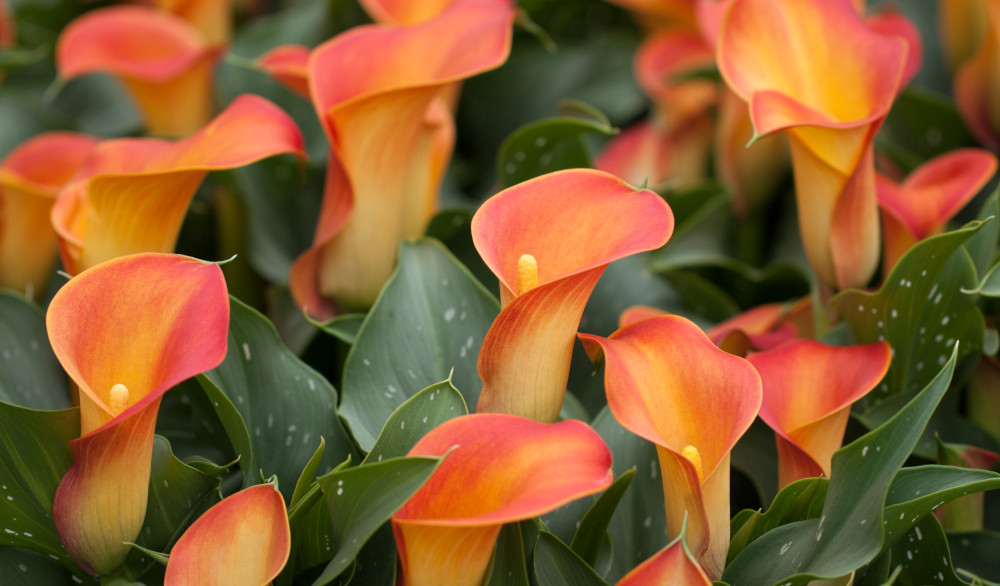
Zantedeschia is a genus of flowering plants from the family Araceae and is native to southern Africa. With a rich history dating back to the Ancient Romans, these deciduous or semi-evergreen perennials have been used as a symbol of celebration. Zantedeschia was Named after Professor Giovanni Zantedeschia, an Italian botanist.
There are two main forms of Zantedeschia: hardy and tender. Hardy forms of the plant can be grown outdoors, enjoy moist soil and full sun or partially shaded conditions - these are known as Arum lilies. Tender forms of Zantedeschia prefer being grown in containers or pots and should be brought inside over the winter - these are known as Calla lilies.
With tuberous flora in all colours from whites, yellows and oranges to deep reds and purples, Zantedeschias are not to be overlooked in any garden, as long as they have sufficient sunlight to grow in.
Ready to learn more about growing Zantedeschia? Read on for all there is to know...
Key Information
Soil pH

Position

Hardiness


Where & when to plant Malus (Apples)
Position- Full sun is best, in a warm, sheltered site that isn’t prone to late frosts (this can damage the blossom)
Soil - fertile, well-draining soil. Winter waterlogging should be avoided.
Flowering Period - Spring
Hardiness - as hardy as it gets (H7/ -20°C and below), though blossom may be damaged by a late frost.
Apples can be sold as potted plants or bare roots.
Potted plants tend to be available for most of the year, though best results come from planting in autumn or spring. An autumn planting can be done by those gardening in mild conditions (and broadly speaking, this is the southern half of the UK). For those liable to cold winters, it is best to wait until spring (generally the northern half of the UK). Planting can also be carried out in summer, though may result in poorer establishment. Be prepared to water frequently if you plant at this time!
Bare roots are available during the dormant period, usually between October and March. These should be planted straight away, though it is important to avoid frozen or waterlogged conditions. If necessary, they can be ‘heeled in’ (temporarily planted in the soil to keep the roots from drying out) or soaked in a bucket of water for a few days until more favourable conditions arrive.
When it comes to choosing a location, this depends on whether you intend to grow your apple as a freestanding ‘standard’ tree, or a trained form. Standards are best grown in an open spot such as a lawn (picture that classic orchard setting), while trained forms need the support of posts and wires, often (though not always) fixed to a wall or fence. Patio varieties grown on a dwarfing or very dwarfing rootstock can happily spend their lives in a large container.
How to plant Malus (Apples)
Water potted plants well and allow to drain before planting. Soak the roots of bare root plants in a bucket of water for a few hours prior to planting.
- For trained forms, install support wires prior to planting. See our ‘Pruning and Training’ section below for detailed information.
- If you are planting into grass, remove a circle of grass at least 1m in diameter.
- Dig the soil area over, removing any large stones and weeds and breaking up any lumps. Mix in a generous amount of organic matter such as manure or garden compost (this is especially needed at the base of fences or walls, where the soil can be dry and poor). If your soil is on the heavy side, now is also the time to add plenty of horticultural grit.
- Rake level and firm with your heels. Rake level again.
- Now dig the planting hole, a good tip being to aim for twice the size of the roots. If you are planting against a wall or fence, plant the apple 30cm away from its base.
- Fill the hole with water and allow to drain.
- Place the plant in the hole, ensuring the graft union sits just above soil level. This is a slight bulge at the base of the stem where the named cultivar is fused onto the rootstock. Planting this too deep can result in vigorous suckers as well as increasing the risk of dieback.
- Backfill with soil and firm in gently with your foot.
- Soak well with water.
- Mulch around the base with well-rotted organic matter such as manure or garden compost.
- For planting in containers (best for dwarf, patio varieties), first choose an appropriately sized pot at least 45cm across. You’ll need to repot into a slightly larger pot every few years. Always ensure there are plenty of drainage holes in the bottom.
- It can be a good idea to fill and plant your pot in situ to save yourself the trouble of moving it once full.
- Use a good quality potting compost with plenty of horticultural grit mixed in, and, if not already present in the compost (check the description on the bag) some slow-release fertiliser granules.
- Start by partially filling the pot with compost; enough so that when placed on it the top of the roots sit about 3cm lower than the top of the pot.
- Infill all the space surrounding the roots with compost, firming down with your fingers then adding a little more so the plant is held tight. Again, remember to ensure the graft union sits just above the surface of the compost.
- Pick up the pot (if you can!) and lightly tap on the potting bench or ground a few times to help further settle the compost around the plant.
- Soak well with water.
- A mulch with horticultural grit will look attractive and help to prevent a ‘cap’ or crust forming on the top of the compost (something container plants can suffer due to the artificial nature of their watering).

What to plant with Malus (Apples)
The first thing to think about is whether you need a pollination partner for your apple tree. Some varieties are self-fertile (e.g., ‘Braeburn’), and will crop without other varieties in the vicinity. Others (e.g., ‘Gala’ and ‘Golden Delicious’) are not self-fertile and need a different variety nearby with a compatible flowering period. Even the self-fertile varieties tend to crop most bountifully when there are others around to cross-pollinate.
The above examples are all compatible partners for one another.
When it comes to underplanting apples, spring bulbs are the obvious choice. Their life cycle suits the varying light levels found beneath a deciduous tree – making the most of the light pouring through bare branches in spring, then dormant and untroubled by the deep shade of the canopy later on.
Alternatively, go for low growing perennials that can cope with dry shade. Think Galium odoratum, brunnera, alchemilla, and epimedium. Give your apple several years to establish before underplanting with these – too soon and the competition for water and nutrients may hinder its growth.


How to care for Malus (Apples)
Pruning and Training
Firstly, lets look at the pruning technique for a standard tree. The aim here is to create a free-standing tree with a short trunk (around 80cm) topped with an open, goblet-shaped crown. This is the ideal shape for producing quality, evenly ripe fruit that can be easily harvested.
Starting with an untrained, one year old tree:
- Straight after planting during dormancy, cut the main stem back to about 80cm above ground level, just above a healthy bud. If you plant during the growing season, it’s best to delay this first prune until winter.
- The following winter, choose three or four strong sideshoots that are evenly spaced and growing outwards. Shorten these by a half to two thirds, cutting just above a healthy, outward-facing bud. Remove any sideshoots on the trunk below these.
- The second winter, you should find the three or four selected sideshoots from last year have produced their own sideshoots. Select eight to ten of these (again, evenly spaced and growing away from the centre) and shorten by one third to a half, to a healthy outward-facing bud (or an upward facing bud if the shoot is horizontal). Thin out any other badly placed, congested, or unwanted growth, including any strong, upright shoots coming from the centre of the tree.
- In the third winter, cut back any new growth on the selected sideshoots by a quarter. Leave all other growth untouched unless it is growing towards the centre, or is dead, diseased, damaged, or rubbing against another shoot.
- From the fourth winter onwards, remove dead, diseased, damaged, and rubbing growth, as well as anything growing in or towards the centre. Leave shorter (i.e., less than 20cm) weaker shoots untouched. Shorten the new growth from the main stems by a quarter to a third, cutting above an outward-facing bud.
Rather than having a freestanding tree, you might decide to train your apple to fit it into a small space, create an attractive feature, make harvesting even easier, or all three! There are a variety of different shapes to choose from, the most popular being:
Cordon: a single stem angled at 45° with lots of short, fruiting side branches. A good option for a small space or container.
Espalier: a central trunk with several tiers of horizontal branches. An attractive use of a vertical space.
Fan: a short trunk with a fan of branches on top
Stepover: a short trunk with two horizontal branches on each side. Often used as edging for vegetable gardens, and a good way to squeeze the most possible produce into a space.
The form you choose will determine everything from the spacing of the wires to the pruning technique. Let’s dive in!
Cordon
Support
This form needs three wires spaced 60cm apart, the lowest one 30cm from the ground. These can be attached to a wall, fence, or sturdy posts every 2m-3m. Strong, galvanised wire is best, kept taut with straining bolts. The wire should be at least 10cm away from a wall or fence to ensure adequate air circulation for the plant.
Individual container-grown cordons can be supported with a strong bamboo cane (they are usually less vigorous than those grown in the open ground).
Position
When planting multiples, cordon apples can be grown in rows with a spacing of just 60cm between plants. Ideally, the row should run north to south, and the apples should be planted at an angle of 45° towards the north (this is to get maximum light penetration).
Pruning
Starting with an untrained, one year old tree:
- Straight after planting in winter, cut back any long side shoots to three or four buds. Leave any which are shorter than 10cm untouched. If you plant during the growing season, it’s best to delay this first prune until winter.
Leave the main stem unpruned and tie into the supporting wires. - In mid to late August of the first summer, prune any of the shoots you nipped back in winter to just one leaf above the cluster of leaves found at the base of this year’s new growth.
Find any new shoots which have grown this year directly from the main stem, and cut back to three leaves above the basal leaf cluster.
Tie in any new main stem growth to the supporting wires. - After this, pruning should be done every summer in mid to late August as follows:
- Find any long shoots (20cm+) which are growing from previously pruned sideshoots. Cut back to one leaf above the basal leaf cluster.
- Leave any new shoots which are less than 20cm long untouched.
- Use this opportunity to check the ties to the support. Remove any which have become too tight and install looser replacements. - Once the cordon reaches the desired height, cut the main stem back in May to a weaker side shoot. Treat any subsequent regrowth from this as for sideshoots above.
Espalier
Support
This form requires a series of wires spaced 35-45cm apart, the lowest one 40cm from the ground. These can be attached to a wall, fence, or sturdy posts. Strong, galvanised wire is best, kept taut with straining bolts. The wire should be at least 10cm away from a wall or fence to ensure adequate air circulation for the plant.
Individual container-grown espaliers can be supported with a specially constructed bamboo or metal frame or positioned against a wall or fence with wires installed as above.
Position
A south or south-west facing position is best. Fix a bamboo cane vertically to the wires and plant the single-stemmed tree in front of this. Tie to the cane using garden twine.
Pruning
Starting with an untrained, one year old tree:
- Straight after planting in winter, prune the stem back to a healthy bud 5-7cm above the first wire. If you plant during the growing season, it’s best to delay this first prune until winter.
- In the first spring and summer, tie the new vertical shoot into the bamboo cane – this is the new central leader from which the second tier will come.
Select one strong shoot on each side of the main stem to become the first tier. Tie to bamboo canes attached to the supporting wires at a 40°C angle. Don’t train them horizontally just yet as this will reduce their vigour. - In late summer once growth has stopped, you can lower these bamboo canes into a horizontal position.
- In the following winter or early spring, prune the central leader to a healthy bud about 5cm above the next wire. Remove any side shoots from this main stem that won’t be needed for tiers.
- Repeat the steps above (from the second bullet point onwards) for the formation of the next tier, continuing until all tiers are formed.
- From then on, carry out routine pruning every year in mid to late August as follows:
- Once the final tier is formed, completely remove any growth from the central leader.
- Cut back new side shoots from the horizontal tiers to three or four leaves above the basal leaf cluster.
- Older side shoots that have already been pruned in previous years can be cut back to one leaf above the basal leaf cluster on this year’s growth.
- Remove any vigorous vertical shoots completely.
Fan
Support
This form requires a series of wires spaced 15cm apart, the lowest one 40cm from the ground. These can be attached to a wall, fence, or sturdy posts. Strong, galvanised wire is best, kept taut with straining bolts. The wire should be at least 10cm away from a wall or fence to ensure adequate air circulation for the plant. Expect your fan to reach around 2m in height.
Position
A south or south-west facing position is best. Plant the tree at a slight slope towards the support.
Pruning
Starting with an untrained, one year old tree:
- In spring, cut the main stem back to 40cm, or three strong buds.
- In summer, fix two bamboo canes to the supporting wires at 45° angles either side of the main stem. Tie two of the shoots that have come from the buds, which will form the ‘arms’ of the fan. Remove any other shoots coming from the main stem.
- In the second spring, shorten these two arms by a third, taking them back to an upwards facing bud. Once again, remove any other shoots coming from the main stem.
- That summer – the important part. Select four shoots from each ‘arm’ – one on the lower side, two on the upper side (evenly spaced), and one towards the tip to extend the existing ‘arm’. Tie these in, manipulating them to sit about 30° to the main arm. Use bamboo canes if necessary.
Remove completely any shoots growing towards the wall or fence, and shorten all others to one leaf. - Throughout that growing season, regularly tie in any new growth from these shoots to maintain straight lines. Any well-placed side shoots (i.e., which grow where there is space), can be tied in.
- From year three onwards, prune once a year in late summer. The aim is to only prune shoots which are longer than 20cm, leaving shorter ones untouched. Those that arise from the main framework can be pruned back to three leaves above the basal leaf cluster. Those that arise from laterals or sideshoots can be pruned back to one leaf above the basal cluster.
Stepover
Support
This form requires just one wires between 40cm and 60cm above the ground. This is usually attached to a series of sturdy posts spaced 1.5m – 3m apart. Strong, galvanised wire is best, kept taut with straining bolts.
Position
Insert a bamboo cane vertically into the ground and fix to the wire. Plant the single-stemmed tree in front of this and tie to the cane using garden twine.
Pruning
Exactly as for an espalier, though stopping at one tier.
Watering
Like all trees, apples should be regularly watered during their first year or two in the ground, after which they should only need watering in very hot dry spells when the fruit is swelling.
Container-grown apples have less access to moisture so need regularly watering throughout every growing season. Allowing the top couple of centimetres of compost to dry out between watering is a useful rule of thumb to help avoid overwatering. To check this, wiggle your finger down into the compost until you feel moisture. From mid-autumn, the British climate tends to take over watering needs, though do remember to step in in the event of an unseasonably dry spell.
Feeding
The secret to a healthy, bountiful apple tree is to feed it each spring. Use a high potassium feed such as blood, fish, and bone, scattered around the base of the plant. Follow this with a mulch of well-rotted organic matter (i.e., a good layer of manure or garden compost applied to the soil around the plant), which has the added benefit of suppressing weeds and locking in moisture.
Container-grown apples rely even more on the gardener for nutrition. Get off to a flying start by making sure you use a good quality potting compost, then each April topdress with the a high potassium feed recommended above. To do this, simply scrape away the top few centimetres of compost and replace with a fresh load with the feed mixed in. Remember also to repot your apple every few years, going up slightly in size each time.
Cold Protection
Apples are as hardy as it gets and can survive even the harshest of UK winters without the need for additional protection. That said, their blossom can be damaged by a late frost, so to avoid reduced fruit later in the year it is important to plant in a sheltered spot which isn’t prone to late frosts.
Pests and Diseases
Though apples are easy to grow, tough plants, there are a number of pests and diseases that can affect the quality of their fruit and sometimes overall growth. Here’s a quick guide to spotting the most common issues:
Canker: this fungal disease attacks the trunk and branches, leaving sunken, dead patches. It can also sometimes attack fruit, which will rot and fall. Remove and dispose of affected material if you can.
Scab: another fungal disease which causes dark, scabby patches on leaves, fruit, and sometimes branches (which then provides an entry point for canker). Practising good garden hygiene and caring for your apple tree properly is the best way to avoid this one.
Bitter pit: this is a disorder which causes dark, brown spots in the throughout the fruit which taste bitter. It can appear when the fruit is nearly ripe, as well as when it is in storage. It is associated with a deficiency in calcium and dry conditions, so proper feeding and watering as above is key for preventing this.
Brown rot: this fungal disease causes fruit to rot on the tree, which will sometimes fall and sometimes remain in place in a mummified state. Removing and disposing of all affected fruit as soon as possible is all that can be done to reduce spread.
Aphids: these sap-sucking pests can distort foliage. Where possible they should be tolerated as their feeding rarely affects the overall health of the tree. If necessary, larger populations can be wiped off by hand or blasted off with a hose.
Honey fungus: this is a root decaying fungus, which is more likely in or near to heavily wooded areas. Look out for reduced vigour and the telltale fungal bodies around the base of the trunk. Unfortunately, there is little to be done once this takes hold other than removing and disposing of the entire tree.
How to propagate Malus (Apples)
Even if you have success with a hardwood cutting (which, for apples, are notoriously tricky to root), you then have the complex task of grafting this onto a dwarfing rootstock to avoid having an enormous tree.
Another option which many people like the idea of is to grow an apple tree from seed. The drawback here is that apples rarely come true from seed, and more often than not the offspring produces tasteless, inedible fruit. Added to the fact that it takes around ten years for a seedling to become a fruiting tree, the whole thing risks being a monumental waste of time! And of course, the same issue of the offspring needing to be grafted onto a dwarfing rootstock remains.
All in all, we’re of the opinion that apples are best bought as young plants from professional growers.
Common Malus questions
How long does it take for an apple tree to bear fruit?
When bought as young plants, dwarf apples (trained or container-grown forms) can bear fruit in as little as two to three years, while standard apple trees (freestanding) take around eight years.
What is the best way to grow apples?
This very much depends on the space you have. In a big, open spot such as in a lawn or middle of a large bed or border, you might go for a freestanding tree (known as a standard). For a more space saving solution, try a trained form against a wall or fence. In allotments or veg gardens when all the growing space is spoken for, stepovers edging the beds can be a good option.
Do I need two apple trees to get fruit?
This depends whether you have a self-fertile variety or not. Self-fertile varieties can be grown in isolation and still bear fruit, whereas non self-fertile varieties need a different type of apple nearby with which to cross-pollinate. Care needs to be taken to ensure the two varieties have corresponding bloom times. A simple online search for ‘apple pollination groups’ will bring up the information you need for this.
How do you know when it’s time to harvest apples?
You’ll know when the fruit is ready to pick when given a slight twist it comes away from the tree easily. Windfall on the ground is another clue that the time is right.
What’s the best way to store apples?
While early varieties (i.e., those which ripen from late summer) are best eaten within a few days of picking, later varieties can be stored for several months. Select only the best, unblemished fruits and store in a cool, dark, frost-free place such as a shed or garage. Check regularly for outbreaks of rot or any other form of deterioration as this can quickly ruin the whole lot. Dispose of any looking past their best.
