


How to grow Philotheca (Eriostemon)
Also known as the gin and tonic plant or the wax flower, this handsome Australian shrub is grown for its long-lasting, waxy flowers, and evergreen foliage which emits a zesty fragrance of juniper and lemon (i.e., G&T!) when brushed against.
In the UK philotheca is best grown either as a permanent conservatory plant, or one which spends summer outside and the rest of the year indoors. Until the late 90s, most philotheca species were known as eriostemon, and you will still occasionally see them referred to as this. Though there are 30-odd species, the most widely grown is Philotheca myoporoides. There are many cultivated forms of this available, offering variations in colour and size. The stems of philotheca are popular with florists as a source of long-lasting, sweetly scented blooms during the less abundant months of winter and spring.

Zantedeschia is a genus of flowering plants from the family Araceae and is native to southern Africa. With a rich history dating back to the Ancient Romans, these deciduous or semi-evergreen perennials have been used as a symbol of celebration. Zantedeschia was Named after Professor Giovanni Zantedeschia, an Italian botanist.
There are two main forms of Zantedeschia: hardy and tender. Hardy forms of the plant can be grown outdoors, enjoy moist soil and full sun or partially shaded conditions - these are known as Arum lilies. Tender forms of Zantedeschia prefer being grown in containers or pots and should be brought inside over the winter - these are known as Calla lilies.
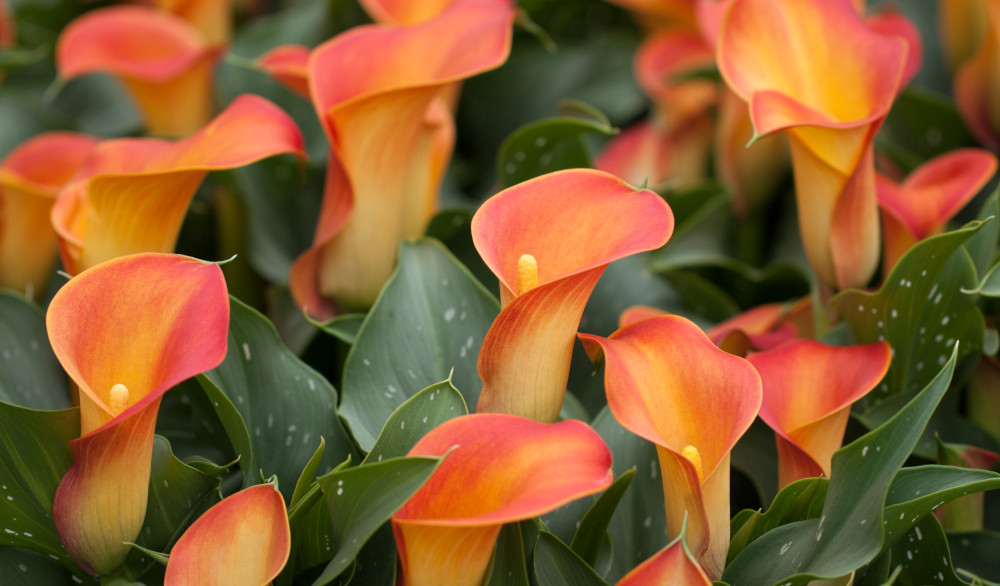
With tuberous flora in all colours from whites, yellows and oranges to deep reds and purples, Zantedeschias are not to be overlooked in any garden, as long as they have sufficient sunlight to grow in.
Ready to learn more about growing Zantedeschia? Read on for all there is to know...
Key Information
Soil pH

Position

Hardiness


Where & when to plant Philotheca
Position - Full sun
Soil - Moist yet well-draining, with a neutral to acidic pH (use ericaceous compost when growing in a pot)
Flowering Period - Late winter and spring, then sometimes again in autumn
Hardiness - Usually tender (H2, 1 to 5°C). Some of the cultivated forms are said to be hardier, such as the variegated ‘Gold Touch’ which has a rating of H4 (-5 to -10°C).
If you’re intending to keep your philotheca as an indoor plant, pot up any time during the growing season (though spring is the optimum moment), and place in full light. Philotheca is a sun-loving shrub for which anything other than a conservatory, glasshouse, or sunroom is unlikely to provide sufficient brightness. Position away from radiators and heaters.
You may wish to enjoy your philotheca outdoors during the warmer months. As well as livening up areas like patios, courtyards, and decking, a spell outside can give indoor plants a boost to their wellbeing. The increase in light and airflow aids healthy growth, exposure to the garden ecosystem can help keep indoor pests at bay, and rain washes off dust accumulated on the leaves. Remember, however, that this plant hails from far warmer climes than ours and can only survive outside in the UK once all risk of frost has passed (this varies from region to region, though tends to be mid to late May). To be on the safe we tend to move ours out in June, returning to the protection of an indoor environment in September.
When moving tender plants such as this outdoors, it’s crucial to gradually harden them off rather than shock them with a sudden move. When young and small, the easiest way to do this is by using a cold frame opened in gradual increments over the course of a week or two. Keep the lid closed at night until the last couple of days of the hardening off period.
If you don’t have a cold frame, or your philoheca has grown too large to fit in one, a bit of horticultural fleece combined with a spot of ‘musical pots’ works just as well. A couple of weeks before you anticipate moving your philotheca out, wrap it in a couple of layers of fleece and place outside during the day, moving back into a warm, protected environment at night. Do this for a few days then reduce the fleece to one layer. After a few more days like this, remove the fleece completely. If it’s warm enough you can leave outside at night too, though reapply the fleece for this. After a couple of days, it’s then time to remove the fleece altogether. It’s a bit of an arduous process, but worth the effort to ensure your plant survives the transition from indoors to out.
Of course, hardier cultivars such as ‘Gold Touch’ are the exception, and may remain outdoors (in a pot or in the ground) all year round in milder regions. Choose a sunny, sheltered spot such as at the foot of a south-facing wall.
How to plant Philotheca
- For planting in a container, the best practice is to start just a few centimetres larger than the nursery container and increase the size gradually every couple of years. Always ensure there are plenty of drainage holes in the bottom.
- It can be a good idea to fill and plant the pot in situ to save yourself the trouble of moving it once full, particularly if it is large or heavy.
- Use a good quality ericaceous compost, and, if not already present in the compost (check the description on the bag) some slow-release ericaceous fertiliser granules.
- Start by partially filling the pot with compost; enough so that when placed on it the upper surface of the root ball is about 3 centimetres lower than the top of the pot.
- Infill all the space surrounding the root ball with compost, firming down with your fingers then adding a little more so the plant is held tight.
- Pick up the container and lightly tap on the potting bench or ground a few times to help further settle the compost around the plant.
- Soak well with water.
- A mulch with horticultural grit will look attractive and help to prevent a ‘cap’ or crust forming on the top of the compost (something container plants can suffer due to the artificial nature of their watering).
- For planting in the garden, dig the soil area removing any large stones and weeds and breaking up any lumps. Now is your chance to improve the soil by mixing in some organic matter. Something acidic such as composted pine needles or leaf mould is ideal, though manure or garden compost will also do if you don’t have these to hand. Rake level and firm with your heels. Rake level again.
- Water the plant well and allow to drain before planting.
- Dig a hole twice the width of the root-ball.
- Place the plant in the hole, ensuring the top of the root ball sits level with the surface of the soil. Too low and the plant may rot, too high and the roots can dry out.
- Backfill with soil and firm in gently.
- Soak well with water.
- Mulch around the base with well-rotted organic matter.

What to plant with Philotheca
Bring a slice of Australia to your conservatory or patio by combining philotheca with other Aussie natives, including callistemon, dwarf eucalyptus, craspedia, brachyscome or hardenbergia.


How to care for Philotheca
Pruning and Deadheading
Philotheca is classed as RHS pruning group 1, which means it requires little pruning other than a light tidy after flowering (removing dead, diseased, and crossing branches). Having said this, when grown permanently indoors it can become rangy and may need restrictive pruning. Trimming the whole lot back by about 2 centimetres after flowering can help maintain a neat, well-shaped shrub.
Watering
Phillotheca in a container can be watered freely throughout the growing season, and sparingly in winter.
Like all woody plants, philotheca in the ground benefits from regular soakings throughout its first couple of growing seasons. Once established it is drought tolerant and should be self-sufficient in all but the most prolonged periods of hot, dry weather.
Feeding
In a container, an ericaceous liquid feed applied monthly throughout the growing season is advisable for optimum health. Remember also to repot you philotheca every few years in early spring into a slightly bigger pot, using fresh compost with slow-release granules mixed in. Once full size it can stay in the same pot, refreshed annually with a top dress. This means scraping away the top few centimetres of compost and replacing with new, again containing slow-release granules.
In the ground, a mulch of well-rotted organic matter (i.e., a layer of composted pine needles, leaf mould, manure, or garden compost applied to the soil around the plant) should provide enough nutrients for your philotheca. This has the added benefit of suppressing weeds and locking in moisture. Mulch when planting, and then again each autumn or spring.
Cold Protection
Most forms of philotheca are tender and will not survive outdoors in the UK during the cooler months (i.e., September to May). They’ll need to be kept in a warm, light-filled indoor environment such as a heated conservatory, greenhouse, or sunroom.
Pests and Diseases
Scale insects can be a problem on philotheca. We recommend a spell outdoors during summer, as this makes for a stronger, healthier plant which is better able to tolerate pests. It also exposes the scale insects to natural predators including ladybirds, parasitic wasps, and birds. Try to boost your garden populations of these by growing a wide range of pollinator-friendly plants, eliminating use of chemicals, and providing suitable habitats.
How to propagate Philotheca
Philotheca is notoriously tricky to propagate; seed germination tends to be very erratic, and cuttings can be slow to root. Because of this, it is usually better to buy it as a nursery-grown plant, however if you welcome a challenge, try taking semi-ripe cuttings in summer:
· Look for growth that is becoming firm and woody at the base but is still flexible at the tip.
· Snip cuttings off the plant, if possible taking a longer piece than the ideal eventual length of around 10cm (to allow for trimming).
· Put in a plastic bag straight away to prevent drying out.
· Fill a pot (or several if you have lots of cuttings) with a well-draining compost mix.
· Trim the end of the cutting to just below a node, i.e., point at which leaves grow.
· Remove all but the top 2-4 leaves.
· If the remaining leaves are large, cut them in half with a sharp knife (to reduce water lost through transpiration).
· Insert the cuttings into the compost and water lightly. Several cuttings can be put in the same container if there is enough space to do this without them touching.
· Place in a propagating unit with bottom heat. If you don’t have one of these you can try covering with a polythene bag on a windowsill (out of direct sunlight), though be aware that success is considerably more likely with bottom heat.
· Keep the cuttings misted and occasionally watered until they root. You will know this has happened when roots emerge out of the bottom of the container. Be prepared for a wait!
· Gently remove rooted cuttings and pot them into individual pots. Grow on in a warm, frost-free environment such as a heated conservatory or greenhouse, until they are large enough to be potted or planted as above.
* Many plants carry Plant Breeders Rights and cannot be propagated for commercial purposes.
Common Philotheca Questions
What are these bumps all over my philotheca stems?
Don’t worry, this pimply surface is a perfectly normal feature of philotheca.
What plant family is philotheca in?
It belongs to Rutaceae, also known as the citrus family. Plants in this family tend to have strongly scented flowers, and include things like orange, lemon, lime, and skimmia. Philotheca’s closest relative is boronia, another Australian shrub with highly scented flowers (Boronia megastigma is used in the perfume industry).
