


How to grow Polygala
Polygala is a genus in the milkweed family (Polygalaceae) of around 500 different species of annuals, perennials, and shrubs. As their cultivation requirements can vary significantly, this growing guide will focus on the needs of Polygala chamaebuxus and its various offspring.
Polygala chamaebuxus is a dwarf, evergreen shrub native to the Alps, and is cultivated for its hardiness, thick, leathery leaves, and pea-like flowers. It is sometimes known by the common name of box-leaved milkwort.

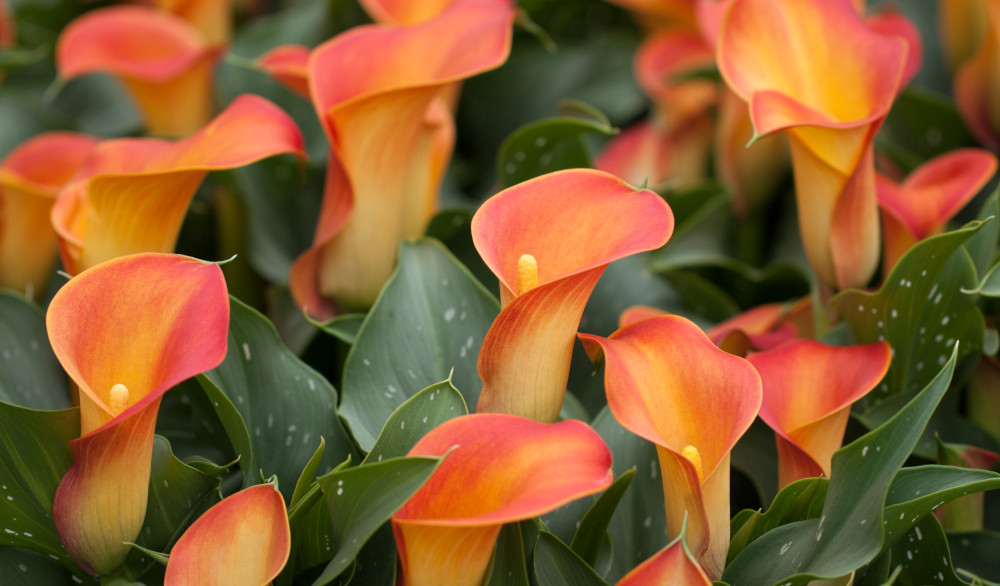
Zantedeschia is a genus of flowering plants from the family Araceae and is native to southern Africa. With a rich history dating back to the Ancient Romans, these deciduous or semi-evergreen perennials have been used as a symbol of celebration. Zantedeschia was Named after Professor Giovanni Zantedeschia, an Italian botanist.
There are two main forms of Zantedeschia: hardy and tender. Hardy forms of the plant can be grown outdoors, enjoy moist soil and full sun or partially shaded conditions - these are known as Arum lilies. Tender forms of Zantedeschia prefer being grown in containers or pots and should be brought inside over the winter - these are known as Calla lilies.
With tuberous flora in all colours from whites, yellows and oranges to deep reds and purples, Zantedeschias are not to be overlooked in any garden, as long as they have sufficient sunlight to grow in.
Ready to learn more about growing Zantedeschia? Read on for all there is to know...
Key Information
Soil pH

Position

Hardiness


Where & when to plant Polygala
Position - Full sun to partial shade
Soil - Humus-rich and sharply drained
Flowering Period - Late spring and summer
Hardiness - Hardy
For best results, plant in autumn or spring. An autumn planting is suitable for those gardening in mild conditions (broadly speaking, the southern half of the UK). For those liable to very cold winters it is best to wait until spring (generally the northern half of the UK). Planting can also be carried out during summer, though a watchful approach to watering is required.
Polygala chamaebuxus makes an attractive evergreen feature in rockeries, gravel gardens, and containers. Small and spreading with a slow rate of growth, it requires next to no maintenance, and given sharp drainage and a humus-rich soil (more on this next) will quietly thrive for many years.
How to plant Polygala
In the ground
- Clear the chosen area of weeds.
- Dig a planting hole several times larger than the root ball. To meet the ideal of being humus-rich and sharply drained, soil should contain plenty of organic matter along with lots of drainage material such as grit or sand. If your soil is clay, add as much drainage material as you can. If it is stony or sandy, add as much organic matter as you can. If it is somewhere in between, add equal quantities of drainage material and organic matter. Avoid soil prone to waterlogging.
- Place the plant in the hole, ensuring the top of the root ball sits level with the surface of the soil. Too low and the plant may rot, too high and the roots can dry out.
- Backfill with soil and firm in gently.
- Soak well with water.
- Mulch around the base with well-rotted organic matter.
In a container
- Choose an appropriate container, ensuring there are plenty of drainage holes. Polygala chamaebuxus is slow growing, so do not be in a rush to pot it into a container to match the estimated eventual size. Better to start small and gradually pot up every couple of years.
- Use a good quality potting compost with lots of horticultural grit mixed in (aiming for around 30% grit content), and, if not already present in the compost (check the description on the bag) some slow-release granules.
- Start by partially filling the pot with compost; enough so that when placed on it the upper surface of the root ball is about 3cm lower than the top of the pot.
- Infill all the space surrounding the root ball with compost, firming down with your fingers then adding a little more so the plant is held tight.
- Pick up the pot (if you can!) and lightly tap on the potting bench or ground a few times to help further settle the compost around the plant.
- Soak well with water.
- A mulch with horticultural grit will look attractive and help to prevent a ‘cap’ or crust forming on the top of the compost (something container plants can suffer due to the artificial nature of their watering).

What to plant with Polygala
Fill your rockery, gravel garden or container display with fellow sharp-drainage-lovers of a similar size and scale. Think lewisia, saxifraga, arenaria, erodium, armeria and Phlox subulata, for an exquisite, low-growing display.


How to care for Polygala
Pruning and Deadheading
None required.
Watering
Water until established, and then in very dry spells thereafter.
Polygala chamaebuxus grown in a container will require regular watering throughout the growing season. Allow the top few centimetres of compost to dry out between soakings.
Cold Protection
Polygala chamaebuxus is hardy to between -5°C and -10°C. Given adequate drainage it should overwinter throughout most of the UK with no need for additional protection. Like many plants, hardiness can be impaired if it sits in wet soil during winter.
Container grown plants can be more susceptible to cold damage. Consider moving into an unheated greenhouse or conservatory if you are expecting a very cold spell, or wrap pots with hessian or fleece.
Pests and Diseases
Polygala chamaebuxus tends to be trouble free.
How to propagate Polygala
Polygala chamaebuxus can be propagated by cuttings, taken during summer.
- Find non-flowering shoots 5-10cm long and snip off the plant.
- Put them in a plastic bag straight away to prevent drying out.
- Fill a container with a compost mix which is at least 50% perlite (or if you prefer, as we do, 100% perlite).
- Trim the end of the cutting to just below a node (point at which leaves grow).
- Remove the lowest third of leaves.
- If the remaining leaves are large, cut them in half with a sharp knife (to reduce water lost through transpiration).
- Insert the cuttings into the compost and water lightly. Several cuttings can be put in the same container if there is enough space to do this without them touching.
- Place in a greenhouse or propagating unit if you have one or covered with a plastic bag on a windowsill if not (out of direct sunlight).
- Keep the cuttings misted and occasionally watered until they root. You will know this has happened when roots emerge out of the bottom of the container.
- Gently remove rooted cuttings and pot them into individual pots. Grow on in a cool yet frost-free environment such as an unheated conservatory, greenhouse, or cold frame, until they are large enough to be planted out.
Common Polygala questions
Can you grow Polygala chamaebuxus from cuttings?
See ‘How to propagate Polygala chamaebuxus’ section above for detailed instructions.
How big does Polygala chamaebuxus grow?
The eventual size of this dwarf species and its cultivars ranges from 5-20cm in height, and 30-50cm in spread.
Other species of polygala can vary hugely; from tiny 5cm x 20cm perennials, to large 2.5m x 2.5m shrubs.
Is Polygala chamaebuxus an evergreen?
Yes, this species will retain its foliage all year round.
