


How to grow Senecio
Senecio can be annuals, biennials, perennials, climbers or shrubs. There are even some succulent varieties. Plants have simple or pinnately divided leaves and daisy-like flowers, occasionally without ray-florets which are usually produced in summer.
Belonging to the daisy familiar, Asteraceae, which also includes the native ragwort and groundsels, alongside the popular houseplants Senecio rowleyanus ‘String of Pearls’ and Senecio halllianus.
We currently supply Senecio candicans ‘Angel Wings’ only. This is a fabulous foliage perennial which is clump-forming and evergreen. Suitable for growing outdoors over summer, this half-hardy (H3) perennial is best planted in a container where it can be transferred indoors or to a heated greenhouse when temperatures fall below freezing. Plants reach around 50cm in height and spread with soft, rounded velvety leaves in shades of silvery white. Foliage is large and eye-catching even without the flat, terminal clusters of small, yellow flowers which are produced in summer.
Ideal for a sunny border, rockery or container this fast-growing plant should be located near to where the tactile foliage can be stroked – making it perfect for a sensory garden, raised bed or window box too. This beauty originates from the Patagonian region of Chile, South America. It grows predominantly close to the coast and is, therefore, tolerant of salty winds and a perfect candidate for a coastal garden with its drought tolerance, acceptance of sandy or chalky soils and love of areas with a mild climate, good drainage and low rainfall.

Zantedeschia is a genus of flowering plants from the family Araceae and is native to southern Africa. With a rich history dating back to the Ancient Romans, these deciduous or semi-evergreen perennials have been used as a symbol of celebration. Zantedeschia was Named after Professor Giovanni Zantedeschia, an Italian botanist.
There are two main forms of Zantedeschia: hardy and tender. Hardy forms of the plant can be grown outdoors, enjoy moist soil and full sun or partially shaded conditions - these are known as Arum lilies. Tender forms of Zantedeschia prefer being grown in containers or pots and should be brought inside over the winter - these are known as Calla lilies.
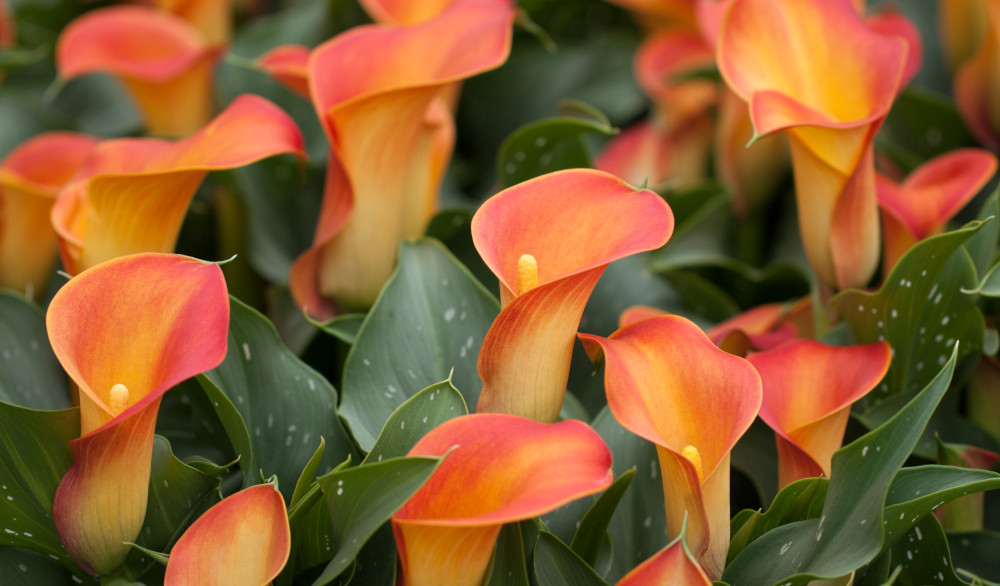
With tuberous flora in all colours from whites, yellows and oranges to deep reds and purples, Zantedeschias are not to be overlooked in any garden, as long as they have sufficient sunlight to grow in.
Ready to learn more about growing Zantedeschia? Read on for all there is to know...
Key Information
Soil pH

Position

Hardiness


Where & when to plant Senecio
Position - Full sun and a south or west facing aspect
Soil - Well-drained
Flowering Period - Summer
Hardiness - Half hardy (H3)
For best results, plant in spring when the risk of frost has passed, and soil is beginning to warm. Wherever you plant bear in mind these luscious beauties will not tolerate temperatures below -5°C, so will either need lifting or planting into pots which can be moved into a heated greenhouse or conservatory over winter. Additionally, plants do not like sitting in wet soil which may cause them to rot. For these reasons, they are often grown as annual bedding rather than perennials but just a little care can preserve them for seasons to come.
Any moist, free-draining soil is fine when temperatures are consistently good. Senecio candicans is perfect for cottage and informal planting, city and courtyard gardens, patios and borders too. It will even nestle well in a jungle garden with its large and illuminating leaves.
How to plant Senecio
In the ground
· Clear the chosen area of weeds.
· Dig a planting hole twice as large as the root ball so that roots are able to spread easily. If your soil is too moist, add plenty of horticultural grit to the planting hole and mix thoroughly so that plants do not sit in wet.
· Place the plant in the hole, ensuring the top of the root ball sits level with the surface of the soil. Too low and the plant may rot, too high and the roots can dry out.
· Backfill with soil and firm in gently.
· Water well until a good root structure has been achieved from whence these drought tolerant perennials should only need watering during extremely hot and dry weather.
In a container
· Choose an appropriate container. Ensure there are plenty of drainage holes in the bottom.
· Use a good quality potting compost with some horticultural grit mixed in (aiming for at least 40% grit), and, if not already present in the compost (check the description on the bag) some slow-release fertiliser granules.
· Start by partially filling the pot with compost; enough so that when placed on it the upper surface of the root ball is about 3cm lower than the top of the pot.
· Infill all the space surrounding the root ball with compost, firming down with your fingers then adding a little more so the plant is held tight.
· Pick up the pot (if you can!) and lightly tap on the potting bench or ground a few times to help further settle the compost around the plant.
· Soak well with water.
· A mulch with horticultural grit will look attractive and help to prevent a ‘cap’ or crust forming on the top of the compost (something container plants can suffer due to the artificial nature of their watering).

What to plant with Senecio
As lovers of sunshine these perennials sit well alongside other perennials with a similar nature. Aquilegias, geums, alliums and agapanthus will all provide beautifully colourful blooms to accent the snowy foliage. Hosta and ferns which tolerate more sunshine will accentuate the leaves even further too.


How to care for Senecio
Pruning and Deadheading
No pruning needed. Simply trim off spent flower stems to keep your plant looking its best.
Watering & Feeding
Water sparingly until established after which this drought tolerant plant. Monitor container planted varieties and water as required. This is a slow growing perennial which does not need additional fertiliser. Pot grown plants should gain enough nutrition from an annual repotting.
Cold Protection
Plants are half-hardy and able to withstand temperatures down to around -5°C so need additional protection across the majority of the UK over winter. If container planted move them into a heated greenhouse or conservatory, if in the ground then lift and pot up before moving indoors or to the greenhouse.
Pests and Diseases
Senecio candicans is generally pest free. Plants may be susceptible to rust or honey fungus so watch for signs of this and treat accordingly.
How to propagate Senecio
Propagate by cuttings or by division of mature plants.
By division
· The best time to divide established plants is in early spring to early autumn when plants are in active growth.
· Dig the plant out of the ground or remove from its container and shake off the excess soil.
· Separate the plant into sections using either swift, cutting blows with a sharp spade, or two forks inserted back-to-back with tines touching, handles then pushed together to prise the plant apart. This depends on the size of your original plant.
· Discard old, damaged, or surplus pieces, keeping healthy, vigorous material.
· Replant selected pieces where desired.
· Water until fully established.
From cuttings
· The best time to take Senecio candicans cuttings is in late summer from the new, young shoots.
· Collect material early in the day when it is full of water and choose nonflowering shoots as they will root more readily.
· Remove up to 10cm of shoot, cutting off the material neatly above a bud on the parent plant
· Place the cuttings material in a clean plastic bag with a label. Store the bag of material in the fridge if you cannot prepare the cuttings immediately.
· Use a sharp knife to trim each section below a node – resulting in a cutting of 5-10cm in length. Remove the lower leaves, pinch out the tip and dip the base in hormone rooting powder/gel.
· Water container/pot from above to help settle compost then place in a closed propagator with a bottom heat of 18-24°C or cover with a transparent plastic bag and remember to ventilate a couple of times a week to prevent rotting.
· Place cuttings in bright, not direct, sunlight and keep compost moist until roots are established (between 2-6 weeks).
· Once rooted, harden off and pot on as necessary and plant out when appropriate.
Common Senecio Questions
1. 1. How fast does senecio grow?
This is a vigorous plant which can be grown outside during summer and then moved indoors or into a heated greenhouse once temperatures dip below freezing.
2. How often should I water senecio?
On average a cup of water once a fortnight should be sufficient once plants are established. If weather is particularly hot, a little more often may be necessary.
3. Can you take cuttings from senecio?
Yes, see instructions above for propagation from cuttings.
