


How to grow Sidalcea
Resembling a miniature hollyhock, sidalcea is a member of the mallow family found growing in grassland, woodland glades, and mountain stream sides in west and central North America. There it is commonly known as checkermallow, while in the UK it is referred to as prairie mallow. There are many species and cultivated forms, probably the best known of which is Sidalcea malviflora ‘Elsie Heugh’ which has large, satin pink flowers with fringed edges.
Sidalcea is a classic cottage garden plant, valued for its profuse summer flowering and fuss-free nature. It fits easily amongst other planting; the stiff, upright stems provide useful, vertical accents while the foliage forms neat, self-contained clumps and doesn’t overpower neighbours.
Like most members of the mallow family, sidalcea produces strong, sturdy stems which won’t require support. Where it differs from other mallows is that it doesn’t suffer from rust nor vigorously spreads itself around by seed, so if you enjoy mallows but have struggled with either of these issues in the past, sidalcea could be the way to go.
Though sidalcea can be relatively short-lived (especially on heavy clay soils), as you’ll find out from this growing guide, there are things you can do to extend its life expectancy and propagating replacement plants is nicely straightforward.

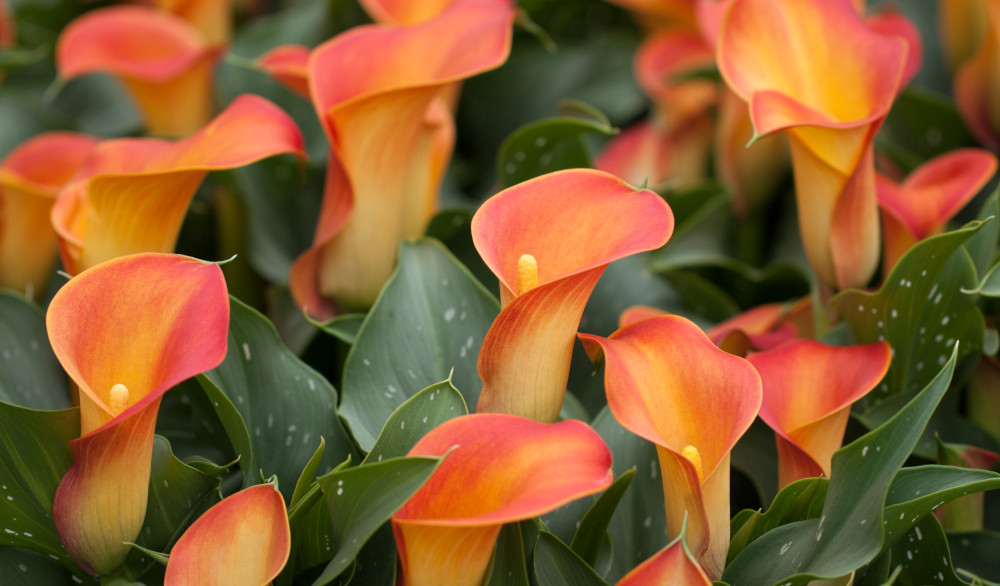
Zantedeschia is a genus of flowering plants from the family Araceae and is native to southern Africa. With a rich history dating back to the Ancient Romans, these deciduous or semi-evergreen perennials have been used as a symbol of celebration. Zantedeschia was Named after Professor Giovanni Zantedeschia, an Italian botanist.
There are two main forms of Zantedeschia: hardy and tender. Hardy forms of the plant can be grown outdoors, enjoy moist soil and full sun or partially shaded conditions - these are known as Arum lilies. Tender forms of Zantedeschia prefer being grown in containers or pots and should be brought inside over the winter - these are known as Calla lilies.
With tuberous flora in all colours from whites, yellows and oranges to deep reds and purples, Zantedeschias are not to be overlooked in any garden, as long as they have sufficient sunlight to grow in.
Ready to learn more about growing Zantedeschia? Read on for all there is to know...
Key Information
Soil pH

Position

Hardiness


Where & when to plant Sidalcea
Position - Full sun is best. While sidalcea will grow in partial shade this results in poorer flowering.
Soil - Grows best in soil which is on the lighter side (sandy and free-draining), though will tolerate most soil types apart from waterlogging.
Flowering Period - Summer
Hardiness - Hardy, usually rated H7 (-20°C and below), though this can be compromised by excessive winter wet.
For best results, plant sidalcea in autumn or spring. An autumn planting can be done by those gardening in mild conditions (and broadly speaking, this is the southern half of the UK). For those liable to cold, wet winters, it is best to wait until spring (generally the northern half of the UK, or those with very heavy soil). Planting can also be carried out in summer, though be prepared to water regularly.
Sidalcea has a naturalistic look ideal for cottage garden borders, well-draining wildflower meadows, or wild gardens. It also makes an excellent cut flower.
How to plant Sidalcea
- For planting in the garden, dig the soil area removing any large stones and weeds and breaking up any lumps. Rake level and firm with your heels. Rake level again.
- Water plants well and allow to drain before planting.
- Dig a hole twice the width of the root-ball.
- Place the plant in the hole, ensuring the top of the root ball sits level with the surface of the soil. Too low and the plant may rot, too high and the roots can dry out.
- Backfill with soil and firm in gently with your foot.
- Soak well with water.
- Mulch around the base with well-rotted organic matter such as manure or garden compost.
- For planting in containers first choose an appropriately sized pot just a few centimetres larger than the rootball, ensuring there are plenty of drainage holes.
- Use a good quality potting compost with plenty of horticultural grit mixed in and, if not already present (check the labelling on the bag) some slow-release fertiliser granules.
- Start by partially filling the pot with compost; enough so that when placed on it the upper surface of the root balls are about 3 centimetres lower than the top of the pot.
- Fill around the plants with compost, firming down with your fingers then adding a little more so they are held tight.
- Pick up the container (if you can!) and lightly tap on the potting bench or ground a few times to help further settle the compost around the plant.
- Soak well with water.
- A mulch with horticultural grit will look attractive and help to prevent a ‘cap’ or crust forming on the top of the compost (something container plants can suffer due to the artificial nature of their watering).

What to plant with Sidalcea
This classic cottage garden plant works particularly well in a border overflowing with other sun-loving favourites in a similar soft pink-purple palette, including verbena, persicaria, kalimeris, nepeta, and origanum. While we usually advise against mixing members of the mallow family due to the chance of rust being passed from one to the other, sidalcea seems immune to this fungal disease, so why not add a lavatera or alcea to the mix as well?


How to care for Sidalcea
Pruning and Deadheading
Sidalcea is a naturally tidy plant which sheds its old flowers as they fade. This means deadheading is not needed for aesthetic reasons, however cutting the stems back hard after flowering can help to encourage a second flush.
Cut all stems back to ground level as they start to die off in autumn.
Watering
In the open ground, sidalcea should be given a good soaking on planting, then a handful of times after this over the coming few weeks. Once established, it should be largely self-sufficient, needing watering only in prolonged periods of very hot, dry weather.
Container-grown sidalcea will need watering regularly. To avoid overdoing it, a good rule of thumb is to allow the top few centimetres of compost to dry out each time. Be aware, however, that in the height of summer this can happen in as little as 24 hours.
Feeding
On healthy, fertile soil, an annual mulch of well-rotted organic matter should provide sufficient nourishment for your sidalcea (manure, garden compost, or leaf mould are all ideal). As well as boosting the nutrient content of the soil, mulch has the added benefits of suppressing weeds and locking in moisture.
In a container, try to use a good quality compost with slow-release granules mixed in. This generally provides enough nutrients for six weeks, after which a fortnightly dose of high potassium liquid feed (such as tomato food) will help to maximise flowering performance.
Cold Protection
Temperature-wise sidalcea is fully hardy, however it can be harmed by excessive levels of moisture during winter. For this reason, it is important to choose a well-draining spot (no heavy soils prone to waterlogging), and it can be an idea to cover the crown with a pile of dry, winter mulch to deflect rain. Bracken or straw work well, as do bark chippings.
Pests and Diseases
Sidalcea tends to be relatively problem-free, however you may find your resident slugs develop a taste for the foliage, particularly when it is young and tender. Encouraging natural predators into your garden, such as birds, frogs, toads, and hedgehogs makes a big difference. Torchlight searches after dark (when slugs are at their most active) are also effective, allowing you to collect the offending molluscs in a bucket and dispose of as you see fit. Relocating to a nearby woods or bagging up and putting in your freezer before popping them in the bin are said to be the most humane approaches.
How to propagate Sidalcea
The best way to propagate sidalcea is by division in autumn or spring. As well as providing you with new plants, this is a good way to breathe new life into tiring clumps. Aim to carry out every two to three years:
1. Choose a day when the soil is not frozen or soggy.
2. Dig the plant out of the ground.
3. Shake off any excess soil.
4. Separate the plant into sections using either swift, cutting blows with a sharp spade, or two forks inserted back-to-back with tines touching, handles then pushed together to prise the plant apart.
5. Discard old, damaged, or surplus pieces, keeping healthy, vigorous material.
6. Replant decent-sized pieces where desired, and any smaller bits can be potted up.
7. Water well until fully established.
* Many plants carry Plant Breeders Rights and cannot be propagated for commercial purposes.
Common Sidalcea Questions
· Is sidalcea a perennial?
While annual species do exist, the sidalceas widely available to gardeners tend to be perennial. This means they die back each winter then can be expected to reappear in spring. If you find yours doesn’t return to growth, the problem is likely to be excessive winter wet. Try to find a more well-draining spot next time, and pile on a dry winter mulch when you cut it back in autumn.
· Is sidalcea poisonous to dogs?
Sidalcea has no toxic effects reported.
· Where does sidalcea grow?
Sidalcea originates from sunny, well-draining spots in west and central North America. It is happiest in the drier end of the soil scale (even poor soil), while struggling in very wet soil.
