


How to grow Strelitzia
Also known as bird of paradise or crane flower, strelitzia is a spectacular and exotic-looking evergreen plant from South Africa. The main moment is its late winter to early summer flowering period, though even when not in bloom its large paddle-shaped leaves make for a striking feature plant. Unable to tolerate temperatures lower than 10-12°C, strelitzia is best grown as a conservatory or greenhouse plant in the UK, though it can spend the warmer summer months outside.
While strelitzia is easier to grow than many other tropical plants, it is still hungry, thirsty, and needs a big, warm, bright space to grow in. This growing guide contains everything you need to know to make it feel at home.

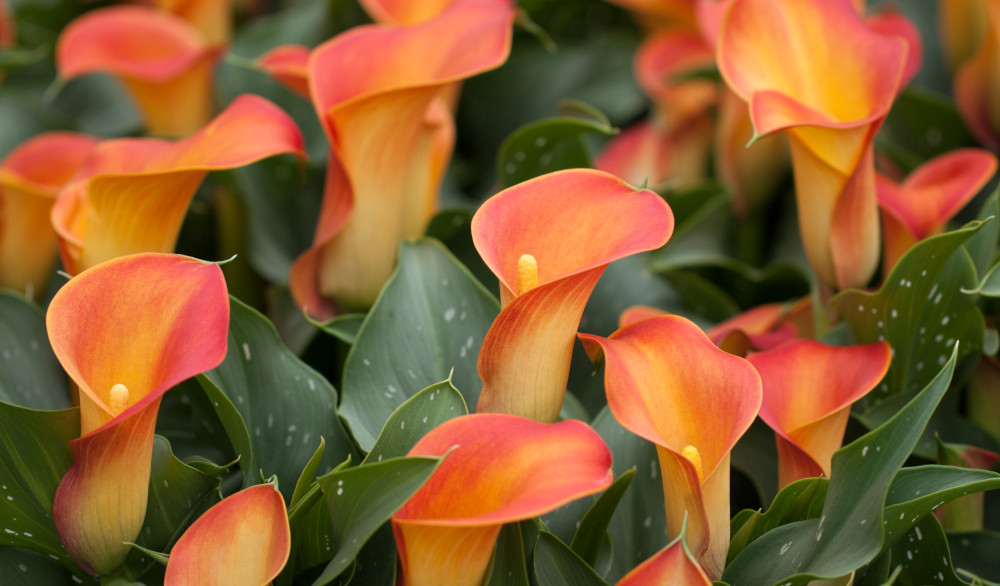
Zantedeschia is a genus of flowering plants from the family Araceae and is native to southern Africa. With a rich history dating back to the Ancient Romans, these deciduous or semi-evergreen perennials have been used as a symbol of celebration. Zantedeschia was Named after Professor Giovanni Zantedeschia, an Italian botanist.
There are two main forms of Zantedeschia: hardy and tender. Hardy forms of the plant can be grown outdoors, enjoy moist soil and full sun or partially shaded conditions - these are known as Arum lilies. Tender forms of Zantedeschia prefer being grown in containers or pots and should be brought inside over the winter - these are known as Calla lilies.
With tuberous flora in all colours from whites, yellows and oranges to deep reds and purples, Zantedeschias are not to be overlooked in any garden, as long as they have sufficient sunlight to grow in.
Ready to learn more about growing Zantedeschia? Read on for all there is to know...
Key Information
Soil pH

Position

Hardiness


Where & when to plant Strelitzia
Position - Indoors: plenty of light though with shade from the hot, midday sun.
Outdoors: sunny with shelter from strong winds
Soil - A 3:1 mix of loam-based compost (such as John Innes No 3) and horticultural grit.
Flowering Period - Late winter to early summer
Hardiness - Subtropical, rated H1B (minimum temperature of 10-15°C)
Horticultural Divisions- Although there are five or so species, Strelitzia reginae is the most widely available for growing indoors. Of this, there are several cultivars and varieties available.
In the UK strelitzia needs to spend some if not all the year indoors, so unless you have an open soil greenhouse bed it is best grown in a container. Any repotting is best done in spring – see next section.
When choosing a spot, there are a few things to consider:
– Space
Although small at first, long term strelitzia is a hefty plant which can reach 1.5 metres by 1 metre and will need plenty of room to grow freely.
– Light
Strelitzia needs as much of this as possible, yet (like many indoor plants), can be damaged by the hot midday sun amplified through glass.
– Temperature
The space needs to be somewhere which remains above 10-12 °C, though can also be ventilated when temperatures exceed 20°C.
Most gardeners find a heated conservatory offers the closest match to these requirements, with shade netting or similar positioned to intercept the midday sun if necessary. Other possibilities are a warm greenhouse or a large, sunny room.
Some decide to move their strelitzia outdoors for the summer months, perhaps onto decking or a patio, or plunged (pot and all) into an exotic, subtropical border. Do this gradually, leaving outside during the daytime only for the first few days so it can acclimatise. Always aim for a sunny, sheltered spot out of the wind, and return indoors as the temperatures begin to drop towards the end of summer/ early autumn.
How to plant Strelitzia
· Strelitzia does best in a tight-fitting pot as it is more inclined to flower with restricted roots. It can usually remain in the nursery pot (or another of the same size) for the first year or two. After this repot into one slightly larger, increasing by just a few centimetres. Do this in spring and always ensure there are plenty of drainage holes in the bottom.
· Use a good quality loam-based compost with plenty of grit mixed in, aiming for a ratio of 3:1. If not already present in the compost (check the description on the bag), add some slow-release fertiliser granules.
· Start by partially filling the pot with compost; enough so that when placed on it the upper surface of the root ball is about 3cm lower than the top of the pot.
· Infill all the space surrounding the root ball with compost, firming down with your fingers then adding a little more so the plant is held tight.
· Pick up the container and lightly tap on the potting bench or ground a few times to help further settle the compost around the plant.
· Soak well with water.
· A mulch with horticultural grit will look attractive and help to prevent a ‘cap’ or crust forming on the top of the compost (something container plants can suffer due to the artificial nature of their watering).
· Repot when the roots become visible at the top of the compost; usually every couple of years.

What to plant with Strelitzia
Turn your conservatory into a colourful oasis by growing strelitzia with companions such as such as brugmansia, plumbago, dipladenia, jacobinia, abutilon and cestrum. If you plan to move these outside for summer (see below), make the climbers portable by training them up an obelisk inserted into their container.
For an exotic border outdoors, use hardy(ish) things like tetrapanax, trachycarpus, schlefflera and fatsia to form a permanent backbone (you may need to give some of these a bit of winter protection during very cold spells). More tender plants such as strelitzia and those above can be plunged or planted out temporarily during the warmer months.


How to care for Strelitzia
Pruning and Deadheading
Strelitzia requires little in the way of pruning. Simply remove any tatty, brown leaves in spring, cutting them off at the base. Flower stalks can be cut off once faded.
Watering
Strelitzia originates from habitats where the soil is free-draining but the air is humid. The best way to recreate these conditions is to use the well-draining compost mix suggested above and stand the container on a saucer filled with gravel, with the water level kept just below the surface of the gravel. During summer, mist the leaves regularly (every morning if you can) using a spray bottle. It’s a good idea to wipe the leaves occasionally too – it’s surprising how much dust can collect on houseplants, having a significant impact on their ability to grow well.
The roots will also need watering – those big leaves can lose a lot of water and if you follow our advice about a tight-fitting pot there won’t be much in the way of compost-stored moisture reserves. Water freely during the growing season, expecting to be doing so as often as every day during the hottest weather. Scale back during winter, allowing the compost to almost fully dry out between large soaks.
Feeding
Regular feeding is a must when it comes to large, showy plants like this in a container. Start by ensuring there are slow-release fertiliser granules mixed into the compost, which generally provide enough nutrients for around six weeks. After this, an application of balanced liquid feed once a fortnight is recommended for the rest of the growing season (April to September). This is a good opportunity to rotate the container to prevent lopsided growth whereby the plant leans towards the sun. Turn it by a quarter each time you feed.
It is also important to repot into a slightly larger container every couple of years, using fresh compost again with slow-release granules mixed in. In the intervening years a ‘topdress’ is advised. Scrape away the top few centimetres and replace with fresh, not forgetting, of course, to add those slow-release granules.
In an open greenhouse bed, mulch immediately after planting with well-rotted organic matter, i.e., a layer of manure or garden compost applied to the soil around the plant. As well as boosting the nutrient content of the soil, this has the added benefit of suppressing weeds and locking in moisture. Repeated each spring, this should provide sufficient nutrients for your strelitzia.
Cold Protection
Strelitzia is unable to survive temperatures below 10-12°C, so should be kept in a warm, protected environment during the cooler months. It can stay here all year round if you wish, or move outdoors during summer.
The exact timing of such a move varies year to year and region to region, though start to monitor the outdoor temperature in late spring/ early summer, and again in late summer/ early autumn.
Pests and Diseases
When grown indoors, the usual issues of spider mite, scale insect and mealybug can occur. Keeping indoor plants as healthy as possible is the key to warding off problems, and by this we mean proper ventilation, adequately spaced plants (for good air flow), keeping everything well-watered and fed, and repotting into larger containers when necessary. A summer spell outdoors can be extremely effective in clearing up any issues, and thoroughly cleaning the indoor environment every winter can help to remove overwintering populations of pests.
Where persistent infestations do take hold, try introducing biological controls (often sachets or tubes containing miniscule natural predators), or in the worst cases, remove the affected plant/s altogether.
How to propagate Strelitzia
The quickest and easiest way to propagate strelitzia is by using suckers which arise from the base of the plant:
1. In spring, sever suckers from the plant, cutting down into the rootball to ensure each has its own roots attached. The rootball will be tough, so you’ll need a sharp knife or secateurs to do this.
2. Pot into individual 9-centimetre pots using a well-draining, gritty compost.
3. Water lightly and grow on as above.
* Many plants carry Plant Breeders Rights and cannot be propagated for commercial purposes.
Common Strelitzia Questions
· How quickly does bird of paradise grow?
This is a relatively slow-growing plant and it is not unusual for it to take 10 years to reach full size. If it is happy and thriving, expect flowering to start after 5-10 years. One for the patient gardener!
· Does bird of paradise need sun?
Yes. When grown indoors it should ideally be drenched in light although with protection from the hot, midday sun. Suitable spots include an east or west facing conservatory/ greenhouse, or a south facing one with shade netting.
· The leaves of my strelitzia keep splitting, what’s the problem?
Nothing – this is completely normal behaviour for strelizia, the leaves of which split as they mature.
· Is strelitzia poisonous to pets?
Strelitzia can be toxic to cats and dogs if ingested.
· Does bird of paradise make a good cut flower?
Yes, the blooms last an exceptionally long time in water and are popular with florists and flower arrangers.
