


How to grow annual Verbena
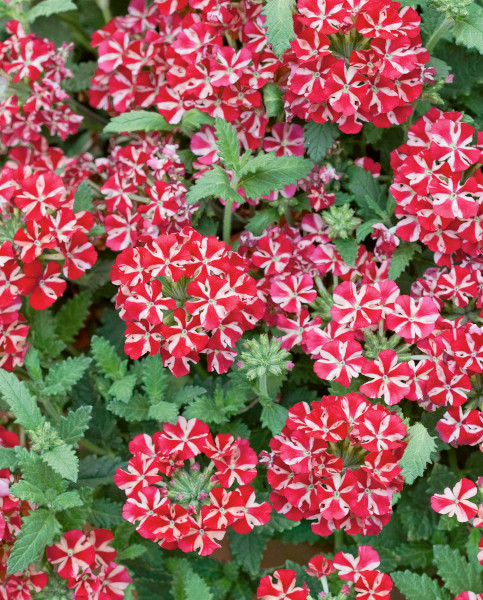
With long-lasting blooms and fast-growing capabilities, annual Verbena are a top choice for gardeners. Ideal for flower beds, borders, edging or hanging baskets, Verbena annuals - also known as Vervain - make great groundcover or trailing plants. Most annuals fall under the cultivar of verbena x hybrida or moss verbena.
Native to Europe, Verbenas often grow in the wild as butterfly habitats. Verbenas fast-growing nature means they can reach full maturity in just a few weeks, growing up to 45cm. With herbal qualities, dark green leaves and incredible flora - in deep blues, whites, lavenders, pinks, reds and bright purples - annual Verbena plants should not be missed!

Key Information
Soil pH

Position

Hardiness


Where & when to plant annual Verbena
Bedding species should only go outside in the UK once all risk of frost has passed. This varies from region to region, though tends to be mid to late May. If your plants arrive before it is safe to go outdoors, keep them in a bright, frost-free environment until the time is right. A greenhouse, conservatory, coldframe, or sunny porch or windowsill are all ideal. Just make sure you don’t let them dry out – small plug plants are best potted up into 9cm pots if they’re going to spend time in a ‘holding zone’ such as this.
Most bedding verbenas are tender (those rated H2) and will need to be gradually hardened off rather than suddenly moved outside. This slow toughening up reduces the chances of the plants going into ‘shock’, which can severely check growth. The exception to this is the handful of newer forms, such as the Endurascape series, which are half-hardy (rated H3) and should cope fine without a hardening off period.
The easiest hardening off method is using a cold frame opened in gradual increments over the course of a week or two. Keep the lid closed at night until the last couple of days of the hardening off period.
If you don’t have a cold frame, a bit of horticultural fleece combined with a spot of ‘musical pots’ works just as well. A couple of weeks before you anticipate planting your verbenas out, wrap the plants in a couple of layers of fleece and place outside during the day (moving back into a warm, protected environment at night). Do this for a few days then reduce the fleece to one layer. After a few more days like this, remove the fleece completely. If it’s warm enough you can leave outside at night too, though reapply the fleece for this. Towards the end of the hardening off period, leave your plants outside completely uncovered for a couple of days and nights before planting out as below.
When it comes to choosing a spot, annual bedding verbenas are ideal for summer container displays, hanging baskets, or window boxes. You could also plant them in the open ground, perhaps to cascade over the edge of a wall or raised bed.
How to plant annual Verbena
The best time to plant annual Verbena is in April and May when the chances of frost have subsided. They can, of course, be grown from seed although this can be time-consuming with a lower success rate. We recommend starting with young, already established plants, which you grow on at home before planting out
Make sure that your desired spot for planting gives you a gap of 20cm between each Verbena plant. You also need to make sure the area has well-drained soil. If it does not, add a mixture of sand and grit to the soil to encourage drainage - this prevents waterlogging and potential root rot
Dig out small holes in the soil and add each plant to its own hole, then backfill with the excavated soil
Gently firm around the plant with your hands and water in to settle the plant. Water regularly while the plant is establishing.
What to plant with annual Verbena
There are several companion plants that will work well with Verbena annuals. They can be grown in flower beds and borders in front of taller plants. Verbena’s long flowering season means you can brighten up the rest of your border with vibrant and long-lasting perennials. Tall, ornamental grasses such as Lagurus ovatus are a great choice that add height while letting Verbena be the centre of attention. Japanese anemone is another good pick, with pale pink or white daisy-like flowers. Rudbeckia, or Black-eyed Susan, will also add height and sunflower-style flora to your garden alongside Verbena.


How to care for annual Verbena
Pruning & Deadheading
Annual Verbenas require only a little bit of work to keep them long-flowering. You can deadhead bloom clusters as regularly as once a week, this will help encourage more flowers and branches.
Watering
Water Verbena regularly keeping the soil moist. Once established, Verbenas enjoy well-drained to dry soil. Verbenas are acclimated to warmer temperatures and drought although they will struggle with frost. To overcome this, keep the soil relatively dry and do not overwater. Furthermore, Verbenas are also susceptible to root rot, so keeping a consistent watering schedule on dry soil is key.
Cold Protection
Annual Verbena will not survive frosts, which is why they are grown as annuals rather than perennials which re-grow each year.
Pests & Diseases
Verbena has a few pests to look out for. Aphids, spider mites, slugs and snails can cause issues for Verbena, including irregularly shaped holes, sooty mould and slimy silvery trails on leaves. Verbena may also suffer from root rot, as it much prefers warmer climates and dry soil. So, do not water more than once a week - let the soil dry out between watering.
How to propagate annual Verbena
It is possible to collect and sow seed from bedding species, though be aware that these may not always come true to the parent plant:
1. Seeds are typically ready for collecting in late summer when they have turned black.
2. Snip the seedheads from the plant using scissors or secateurs. Try to do this in dry conditions, and shake the seeds into a small, labelled paper bag or envelope. Store somewhere cool and dry until you are ready to sow in either autumn or early spring.
3. Fill a seed tray or small pot with a well-draining compost mix, compressing the surface lightly with a flat piece of wood or the bottom of another pot.
4. Sprinkle the seeds evenly over the surface of the compost.
5. Use a garden sieve to cover the seeds with a thin layer of compost.
6. Water with a fine spray until the compost is evenly moist but not waterlogged.
7. Place the seed tray or pots anywhere light, warm, and protected, such as a windowsill or greenhouse. The quickest results will come from a heated propagation unit set at 18-21°C.
8. When the seedlings have grown large enough to handle, transplant them into individual pots filled with a well-draining mix and continue to grow on in a frost-free environment.
9. Keep moist, never soggy.
10. Grow on until large enough to plant out as above.
* Many plants carry Plant Breeders Rights and cannot be propagated for commercial purposes.
Common Verbena Questions
How do you care for Verbena annuals?
Once established, Verbena annuals need watering (or rainwater) only once a week. For longer flowering periods, you can cut back the blooms on a weekly basis to encourage fresh growth.
Does Verbena re-seed itself?
Verbena can re-seed and is more likely to do so in warmer climates. Flowers set seed in autumn so cut back the seedheads to prevent this. However, Verbena’s re-seeding process is not invasive.
Is Verbena a hardy annual?
Depending on the species, Verbena is half-hardy to hardy. It can tolerate warmer climates and drought, but Verbena cultivars that are commonly grown as annuals will struggle in periods of frost or cold.
